Back to All Materials
// Material Catalog

Alumi
num

Lightweight, corrosion-resistant, and anodize-ready alloys for precision enclosures and panels. Compare 5052-H32, 6061-T6, 3003-H14, and 7075-T6 grades — understand their properties, select the right thickness, and choose secondary services.

4Alloy Grades
17Thicknesses
8Services
Aluminum Laser Cutting
Grades & Comparison Thicknesses Properties Services Chemical Composition FAQ
// Alloy Comparison
Pick the Right Aluminum
Each aluminum alloy has unique strength, formability, and finishing trade-offs. Compare them side-by-side to find the right alloy for your application.
Wrought · T6 Temper
$$$$$
6061-T6 Aluminum
Structural aluminum with excellent machinability. Higher strength for brackets and chassis.

Pros

Highest strength of stocked aluminum alloys
Excellent machinability — threads hold well
Heat treatable for additional strength
Good corrosion resistance with anodizing

Cons

Work-hardens — not ideal for tight bends
Requires re-temper process after welding
Density
2.70 g/cm³
Tensile
45 ksi
Finish
Mill
Weldable
Yes (re-temper)
Wrought · H14 Temper · Budget
$$$$$
3003-H14 Aluminum
General-purpose aluminum. Great for covers, guards, and decorative panels.

Pros

Most economical stocked aluminum
Excellent workability and deep formability
Good corrosion resistance for indoor use
Easily welded and brazed

Cons

Lowest strength — not for structural use
Cannot be heat treated
Density
2.73 g/cm³
Tensile
22 ksi
Finish
Mill
Weldable
Yes
Wrought · T6 Temper · Aerospace
$$$$$
7075-T6 Aluminum
Yields the highest strength of any aluminum grade. Ideal for aerospace, military, and highly stressed parts.

Pros

Extremely high strength-to-weight ratio (matches some steels)
Excellent machinability
High fatigue strength

Cons

Generally considered unweldable for most applications
Lower corrosion resistance than 5052 or 6061
Very poor formability (bends will crack)
Density
2.81 g/cm³
Tensile
83 ksi
Finish
Mill
Weldable
No
// Stock Availability
Thickness & Gauge Options
All aluminum sheet is stocked in 48″ × 96″ full sheets. Laser cutting tolerance is ±0.005″ on all gauges.
5052-H32
6061-T6
3003-H14
7075-T6
Gauge Thickness Decimal (in) Metric (mm) Sheet Size Stock

💡 Click any row for full specs, bend limits, and laser tolerances.

Gauge Position — Thin to Thick
Thickness
Thickness Tolerance i
Material
Type
Alloy
Finish i
Protective Film
Max Part Size i
Min Part Size
Min Recommended Hole i
Min Hole Size (absolute)
Min Channel Width i
Min Wall Thickness i
Max Aspect Ratio i
Kerf (Laser Cut Width) i
Cut Tolerance±0.005"
Assist Gas iO₂ / Air (Oxygen assist)
    Stainless steel laser cut part
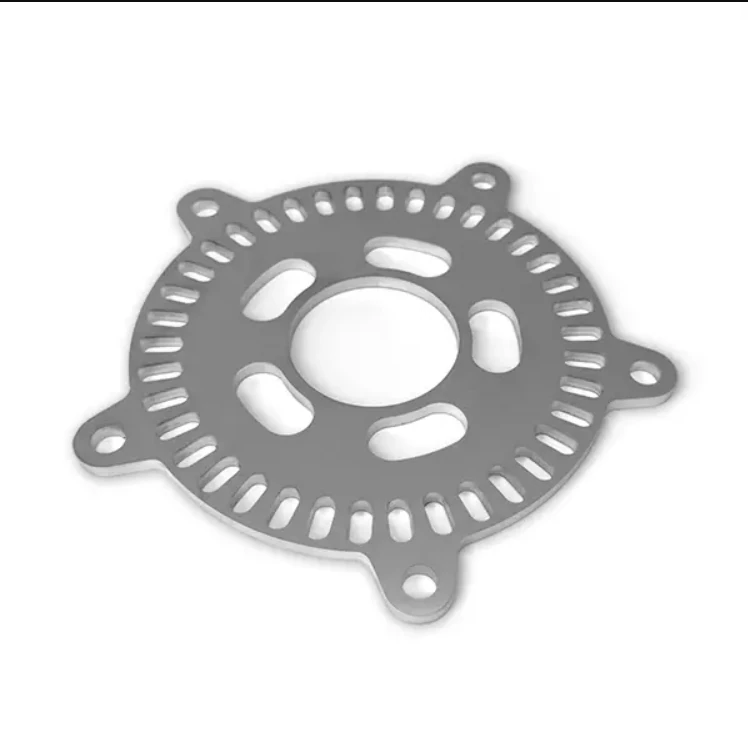
    Aluminum · Laser Cut Part · Mill Finish XEON NC SHOP PHOTO
    Sheet size: 48″ × 96″ · Lead time: 3–5 business days
    * Properties not guaranteed. For reference comparison only — not for design-critical specifications.
    Tensile Strength (Ultimate) i
    Tensile Strength (Yield) i
    Shear Strength i
    Shear Modulus i
    Fatigue Strength i
    Brinell Hardness i
    Elongation at Break i
    Elastic Modulus i
    Poisson's Ratio i
    Density
    Ready to order this thickness? Upload your DXF for an instant quote — our engineers verify material compatibility before production.
    Get an Instant Quote →
    // Material Science
    5052-H32 Aluminum Properties
    Mechanical, thermal, and physical characteristics. Data reflects H32 temper condition per ASTM B209.
    Tensile Strength
    31
    ksi (214 MPa)
    Yield Strength
    23
    ksi (159 MPa)
    Elongation
    11%
    in 2 inches
    Hardness
    60
    Brinell HB
    Density
    2.68
    g/cm³ (0.097 lb/in³)
    Melting Point
    1,190
    °F (643 °C)
    Thermal Conductivity
    80
    BTU/hr·ft·°F
    Max Use Temp
    212
    °F (100°C) continuous

    Grade Comparison

    // Fabrication Services
    Available for Aluminum
    Every secondary service we offer is compatible with aluminum. Anodizing is uniquely available for aluminum alloys.
    Fiber Laser Cutting
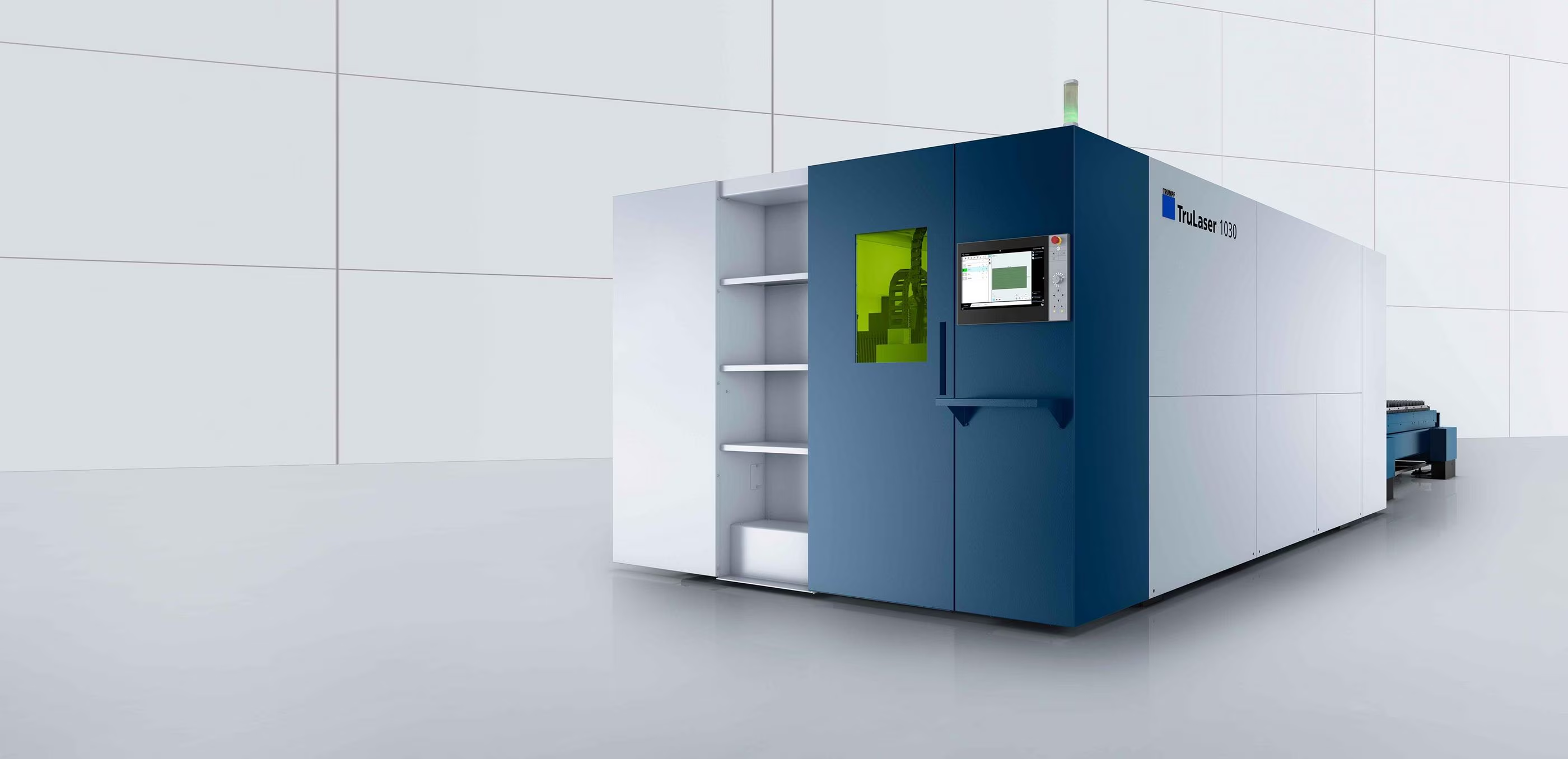
    High-speed precision cutting on our TRUMPF fiber laser with Oxygen or air assist for clean aluminum cuts.
    CNC Bending
    Precision press brake forming up to 1/8″ stainless. Tight radii available on thin gauges.
    Countersinking
    82° and 90° countersinks for flush-mount fastener hardware.
    Tapping
    Thread holes directly into the sheet for blind or through-hole hardware attachment.
    Hardware Insertion
    PEM press-fit nuts, studs, and standoffs pressed into the sheet during fabrication.
    Deburring
    Edge smoothing to remove sharp burrs left from the laser cutting process.
    🎨
    Powder Coating
    Electrostatically applied powder coat in 10+ colors. Stainless requires primer for adhesion.
    Anodizing
    Clear and color anodizing available. Creates a durable, corrosion-resistant oxide layer integral to the aluminum surface.
    // Metallurgy
    Chemical Composition
    Aluminum alloys are defined by their alloying elements — Magnesium, Silicon, Zinc, Copper, and Manganese. These additions each target specific performance goals: formability, strength, machinability, or corrosion resistance.
    Alloying Elements by Grade (% Weight, nominal)
    Aluminum (Al) Base
    Magnesium (Mg)
    Silicon (Si)
    Zinc (Zn)
    Copper (Cu)
    Manganese (Mn)
    5052 — Magnesium drives corrosion resistance. The 2.5% Mg content (no copper, no zinc) gives 5052 outstanding marine-grade resistance and the widest safe bending range of all structural alloys.
    6061 — Mg+Si combine for heat treatability. The Mg₂Si (magnesium silicide) precipitate formed during T6 heat treatment is what gives 6061 its superior strength and machinability compared to other alloys.
    7075 — Zinc + Copper = aerospace strength. 7075's high Zn (5.6%) and Cu (1.6%) content enable the highest tensile strength of any common aluminum alloy — nearly matching mild steel — but at the cost of corrosion resistance and weldability.
    3003 — Manganese for deep formability. The 1.2% Mn addition to a nearly pure aluminum base gives 3003 the softest, most workable character in the lineup — ideal for tanks, HVAC, and deep-drawn shapes.
    Element 5052-H32 6061-T6 3003-H14 7075-T6 Role
    Aluminum
    Al — Base
    Bal.Bal.Bal.Bal. Matrix & base metal
    Magnesium
    Mg — Corrosion / Strength
    2.2–2.8% 0.8–1.2% None None Corrosion resistance, work hardening, formability
    Silicon
    Si — Heat Treat
    ≤ 0.25% 0.4–0.8% ≤ 0.6% ≤ 0.4% Forms Mg₂Si precipitate — enables T6 heat treatment
    Zinc
    Zn — Ultra-Strength
    ≤ 0.10% ≤ 0.25% ≤ 0.10% 5.1–6.1% Primary strengthener in 7xxx series — highest tensile
    Copper
    Cu — Strength / Machinability
    ≤ 0.10% 0.15–0.40% ≤ 0.05% 1.2–2.0% Strength & machinability — reduces corrosion resistance
    Manganese
    Mn — Formability
    ≤ 0.10% ≤ 0.15% 1.0–1.5% ≤ 0.30% Softens grain structure — deep formability, weldability
    Chromium
    Cr — Stabilizer
    0.15–0.35% 0.04–0.35% None 0.18–0.28% Grain growth inhibitor — improves toughness
    Iron
    Fe — Trace
    ≤ 0.40% ≤ 0.70% ≤ 0.70% ≤ 0.50% Controlled impurity — excess causes brittleness

    * Composition ranges per ASTM B209 (sheet/plate). Actual values vary within spec limits.

    5052-H32 · 5xxx SERIES
    Mg-Al · Formability
    2.5% Mg, no Cu/Zn/Si
    Best corrosion resistance & bending
    6061-T6 · 6xxx SERIES
    Mg-Si · Heat Treatable
    Mg₂Si precipitate via T6
    Best structural / machined parts
    3003-H14 · 3xxx SERIES
    Mn-Al · Soft & Cheap
    1.2% Mn, nearly pure Al
    Softest grade — HVAC & covers
    7075-T6 · 7xxx SERIES
    Zn-Cu-Mg · Aerospace
    5.6% Zn + 1.6% Cu + Mg
    Highest strength — no welding
    // Common Questions
    Aluminum FAQ
    Frequently asked questions about our aluminum fabrication capabilities.
    What aluminum alloys do you stock?+
    We stock three aluminum alloys. 5052-H32 is available in eight thicknesses from 26 gauge (0.020″) through 1/4″ (0.250″). 6061-T6 is stocked in four thicknesses from 16 gauge through 1/4″. 3003-H14 is available in three thicknesses from 22 gauge through 1/8″. All sheets are 48″ × 96″ full sheets.
    Can aluminum be anodized?+
    Yes — anodizing is exclusively available on aluminum. It creates a hard oxide layer integral to the surface, dramatically improving corrosion and wear resistance. We offer clear (Type II) anodizing and color anodizing in a variety of shades. 5052 anodizes with the best cosmetic result; 6061 also anodizes well. 3003 is anodizable but may show a slightly cloudier finish.
    What is the difference between 5052 and 6061?+
    5052-H32 is optimized for formability and corrosion resistance — it bends without cracking, anodizes beautifully, and resists marine environments. 6061-T6 is a heat-treatable structural alloy with roughly 35% higher tensile strength. If your part requires tight bends or thin gauges, choose 5052. If it needs drilled/tapped holes, high load capacity, or machined features, choose 6061.
    How does aluminum behave when bending?+
    Aluminum has moderate springback and bends cleanly when proper radii are used. 5052-H32 is the most bend-friendly alloy we stock — minimum inside radius is typically 1× material thickness. 6061-T6 is stiffer and requires wider radii; tight bends can crack, especially in thicker gauges. 3003-H14 is very soft and bends easily. Always design bend relief slots at sharp corners to prevent tearing.
    What assist gas do you use for cutting aluminum?+
    We use oxygen or compressed air as the assist gas when cutting aluminum. Unlike stainless steel (which uses nitrogen to prevent oxidation), aluminum forms a thin, stable oxide layer that doesn't negatively affect most applications. For cosmetically critical parts or parts that will be anodized, we can use nitrogen assist to produce a cleaner, brighter edge with minimal oxidation.
    What edge quality should I expect from laser-cut aluminum?+
    Laser-cut aluminum edges are clean and sharp with minimal dross on thinner gauges. Edge finish is typically 125–250 Ra depending on thickness. Thicker plate (3/16″ and 1/4″) may show more striation on the cut face. If your parts will be anodized or require a cosmetically smooth edge, we recommend our deburring or bead blasting service as a secondary operation.
    Start your aluminum project today.
    Upload your DXF and receive an instant quote. Our engineers will verify material compatibility before production.
    Get an Instant Quote →
    EXPLANATION & DETAILS
    Information