The Heat-Affected Zone (HAZ) in Laser Cutting
A Xeon NC Process Guide on thermal geometry in sheet metal
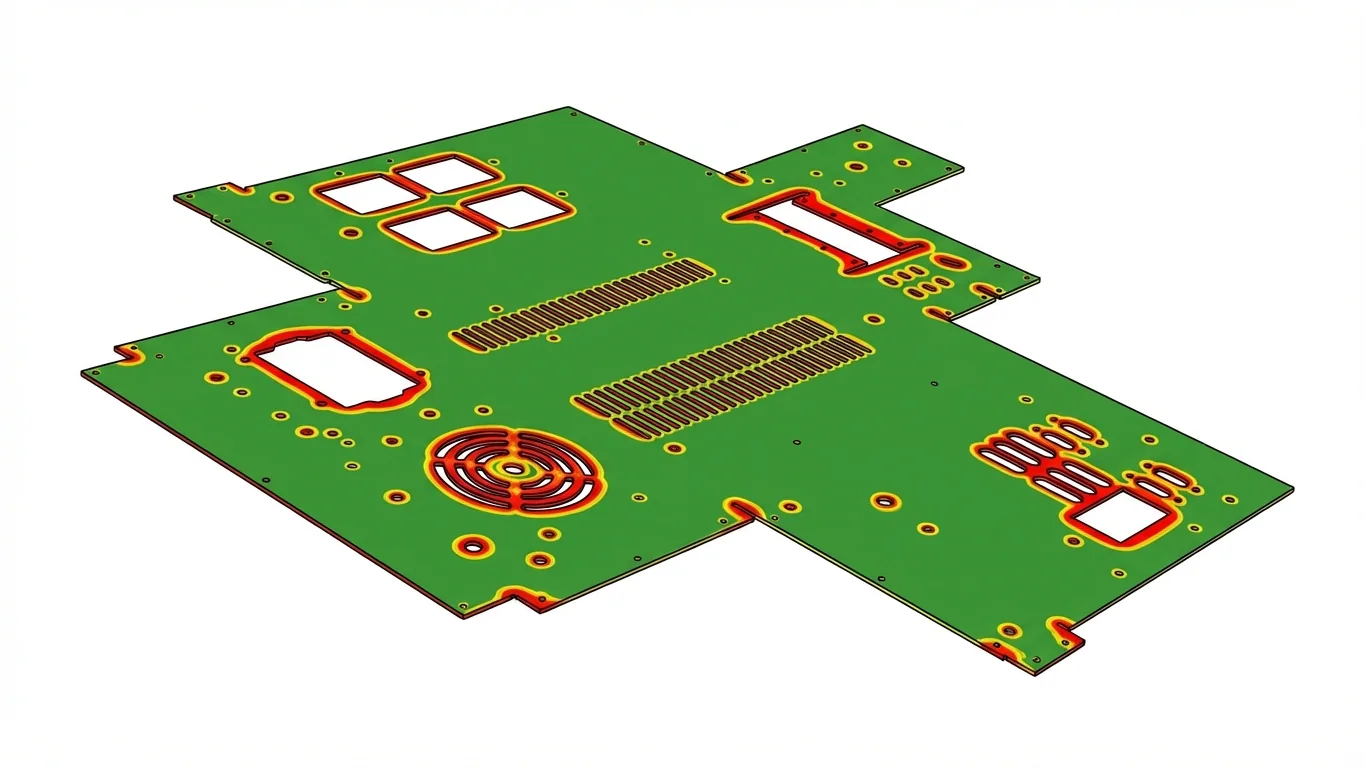
At its core, laser cutting works by intensely heating metal until it melts or vaporizes, while a jet of assist gas clears the kerf. This intense thermal energy inevitably radiates outward into the adjacent base material.
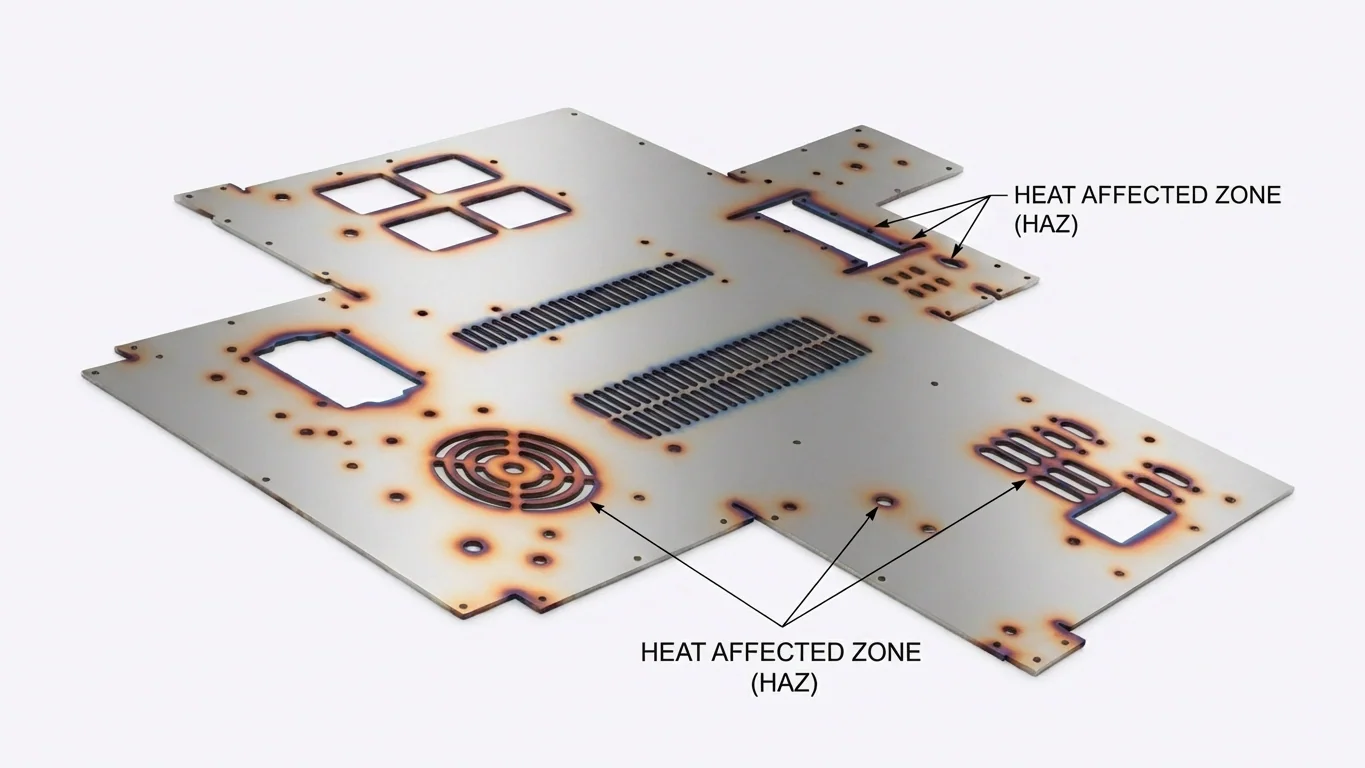
The Heat-Affected Zone (HAZ) is the designated margin of metal bordering the cut edge that has not physically melted, yet has experienced a thermal cycle severe enough to temporarily alter its cellular macro-structure and mechanical properties.
Why thicker material absorbs more heat
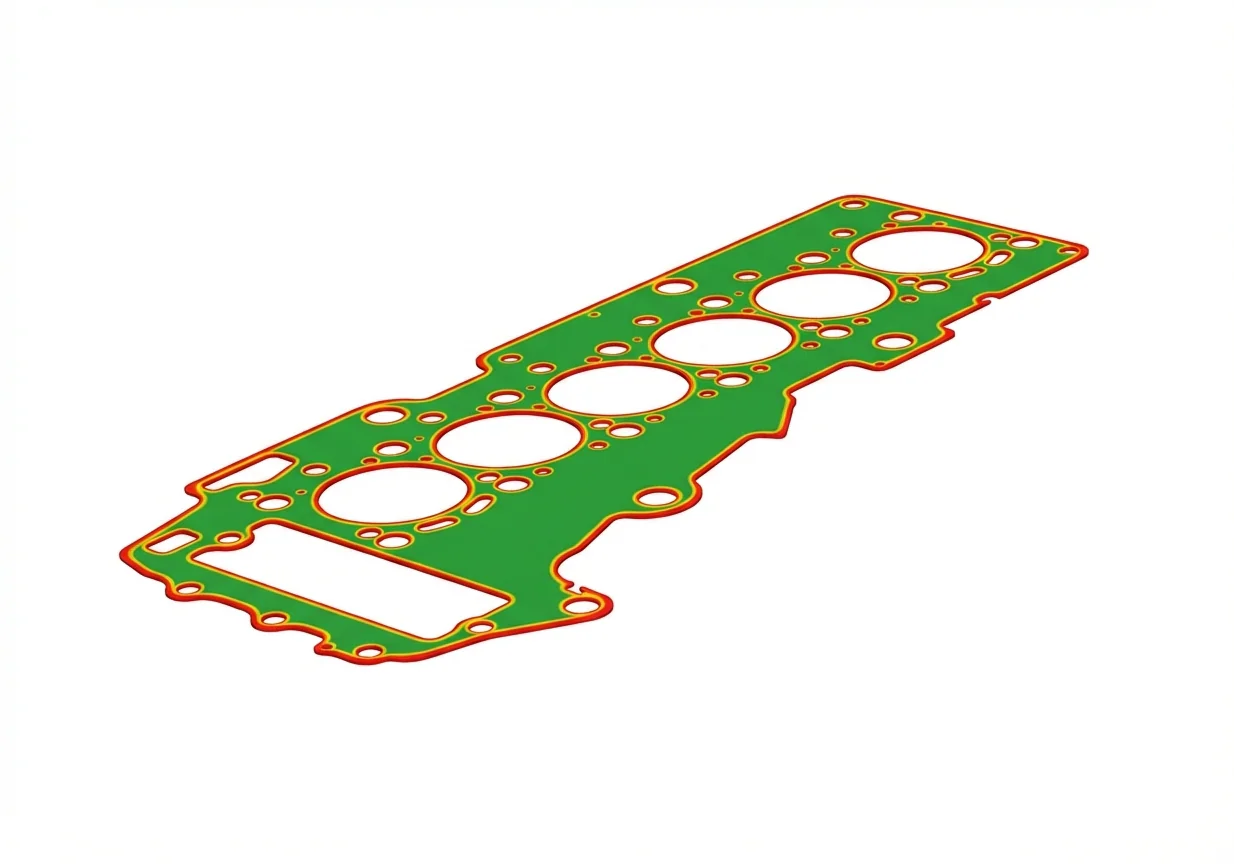
The physical depth and structural severity of the HAZ correspond directly to the total volume of thermal energy absorbed and the thermal profile over time.
Thicker gauge sheet metal demands significantly greater laser power and comparatively slower traverse feeds to maintain a complete cut. Compounding the issue, cutting thick steels—particularly mild steel—often relies on an exothermic oxygen cut, which naturally contributes secondary heat back to the cut boundary.
Because the laser advances at a more deliberate pace, heat conduction has exponentially more time to permeate deep into the adjacent structure rather than cleanly evacuating through the kerf.
Hot spots and clustered geometry
In precision part design, raw cut length is not the only thermal variable. Geographic cut density dictates the material's ability to dissipate sustained heat loads.
When a cutting toolpath navigates a dense cluster of perforated holes, fine lattice features, or closely knit geometries, thermal pockets build up. The underlying material block does not have the ambient mass required to shed heat between sequential cuts.
How HAZ alters material composition
Visible discoloration is rarely the most concerning side effect. Microstructural phase shifts inside the boundary line fundamentally change the component’s secondary processing traits.
- Edge Hardening (Carbon Steel): The swift thermal load and immediate cool-down functions effectively as an edge quench. The higher a steel’s inherent carbon content, the harder this boundary band becomes, sharply increasing tooling wear and failure rates for secondary milling or tapping.
- Annealing and Loss of Temper (Aluminum): Rather than hardening, certain tempered structures like 6061-T6 aluminum behave inversely. High thermal loads can functionally erase their engineered temper along the cut edge, leaving a ductile, weakened fringe behind.
- Micro-Cracking (High-Yield Alloys): Exposing structurally rigid grades to explosive thermal shock waves can generate microscopic relief fissures originating at the cut wall and traveling inward.
Minimizing negative effects
While the laws of thermodynamics dictate HAZ is effectively unavoidable during continuous thermal cutting, its effects can be proactively managed during the design process.
When parts demand absolutely neutral macro-structures on standard gauges with dense clusters, discuss the option of replacing standard oxygen parameters with high-pressure nitrogen assist to mitigate exothermic reactions.
Managing HAZ on Thick Plate: TRUMPF CoolLine
At Xeon NC, cutting dense geometries or small contours in thick sheet metal requires advanced process control. For severe and tight thermal profiles on thick mild steel, we employ TRUMPF’s CoolLine technology.
CoolLine works by spraying a fine water mist precisely around the laser beam as it advances through the cut. This active mist flashes into steam, pulling immense amounts of thermal energy away from the workpiece boundary in real-time. The result is a dramatically reduced HAZ margin, preventing warping and allowing for complex nested features that would otherwise melt or deform.
Standard Cut (Heat Accumulation)
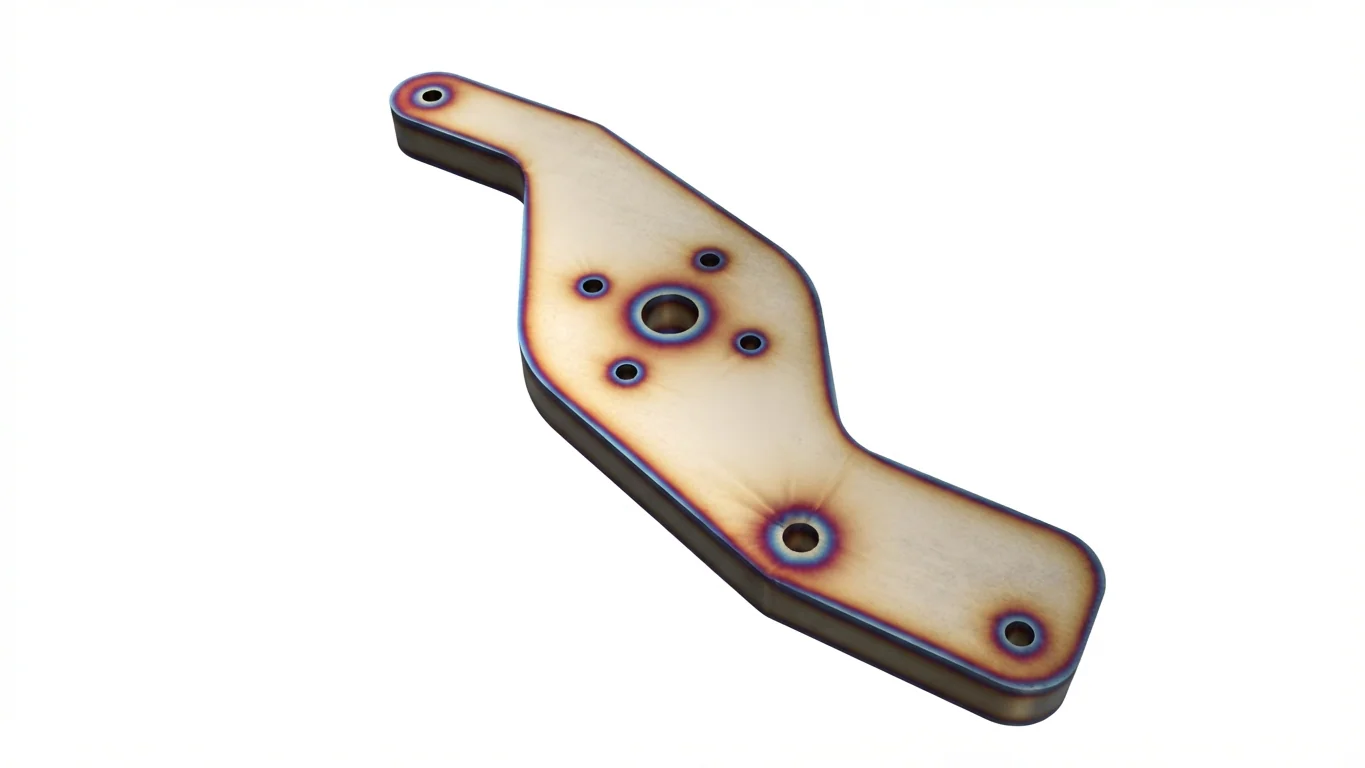
Without active cooling, thick material subjected to dense feature cuts absorbs severe heat, leading to visible HAZ and discoloration around all pierce points.
CoolLine Active (Controlled Temp)
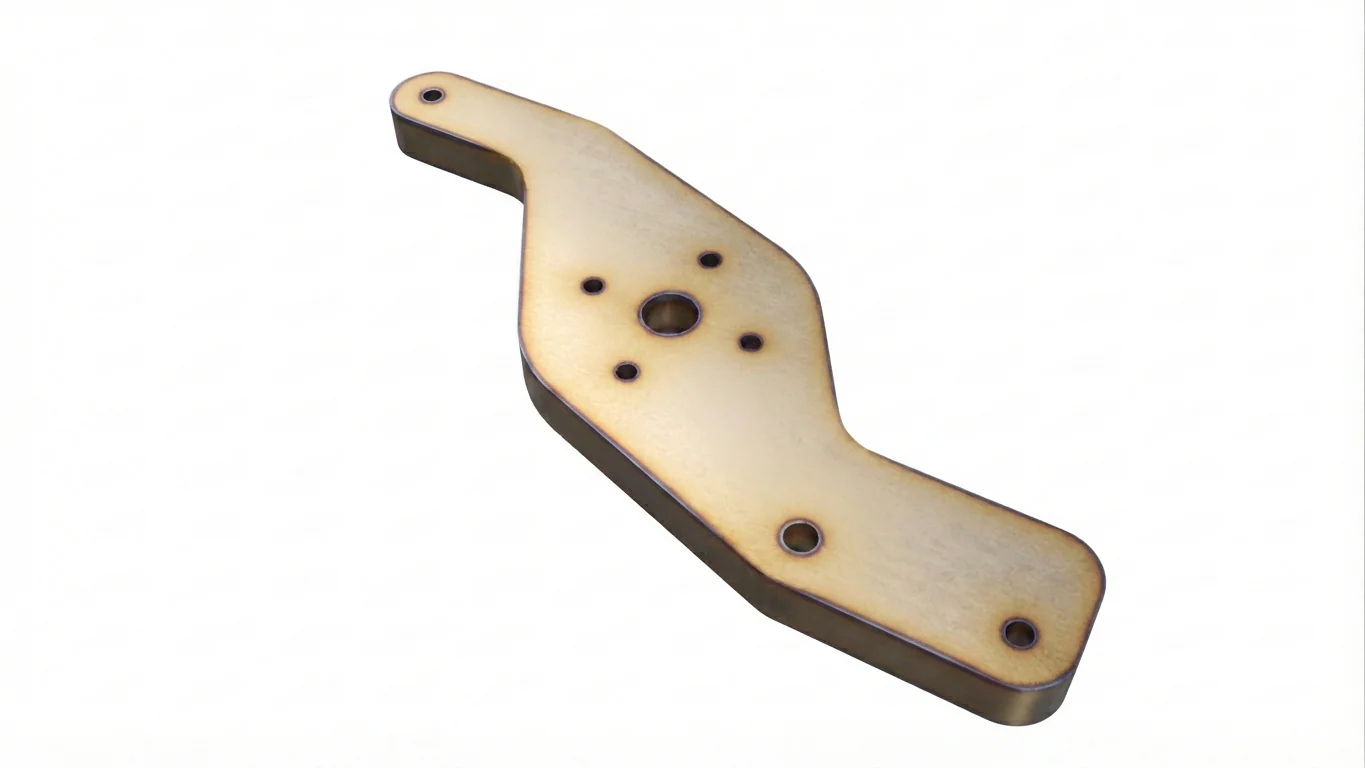
With TRUMPF CoolLine activated, the same dense geometry remains structurally stable and free of thermal discoloration, yielding clean, un-tempered edges.