01 / DEFINE
Start with intent
Connect geometry, material, quantity, finish, tolerance, and function to one production definition.
Manufacturing should not be a black box. Xeon NC gives builders a direct, visible path from CAD to finished hardware—so the people responsible for the outcome remain in command of it.
Connect geometry, material, quantity, finish, tolerance, and function to one production definition.
Know what is configured, approved, in production, verified, and moving toward delivery.
Turn the known requirement into the next useful manufacturing action without an RFQ maze.
Let the physical result inform the next revision, the next quantity, and the next decision.
Manufacturing is full of systems that tell you what happened after it happened.
Status dashboards. RFQ logs. Production meetings. Spreadsheets assembled from last week's information. They can describe the past. They do not give an engineering team the power to act in the present.
Xeon NC is built around a different premise: the people closest to the mission should be able to move.
They should be able to define the part, understand the production path, see the price, resolve risk, and release real work without surrendering control to a maze of inboxes and disconnected handoffs.
Modern lasers cut with extraordinary precision. Press brakes form complex geometry. Finishing systems create repeatable edges and surfaces. The industrial capability exists. Control is usually lost in the space between those capabilities.
A CAD file lives in one system. The quote lives in an email. Material and finish are clarified in another thread. A revised drawing appears after the original has already moved forward. Every boundary creates latency. Every manual re-entry creates another opportunity for intent to fracture.
When a team cannot see the state of the work or act on it, that team is not operating the system. It is waiting on the system. It is a passenger.
The path begins with the production definition: geometry, material, thickness, quantity, bends, holes, finish, tolerances, and the requirements that determine whether the part will work.
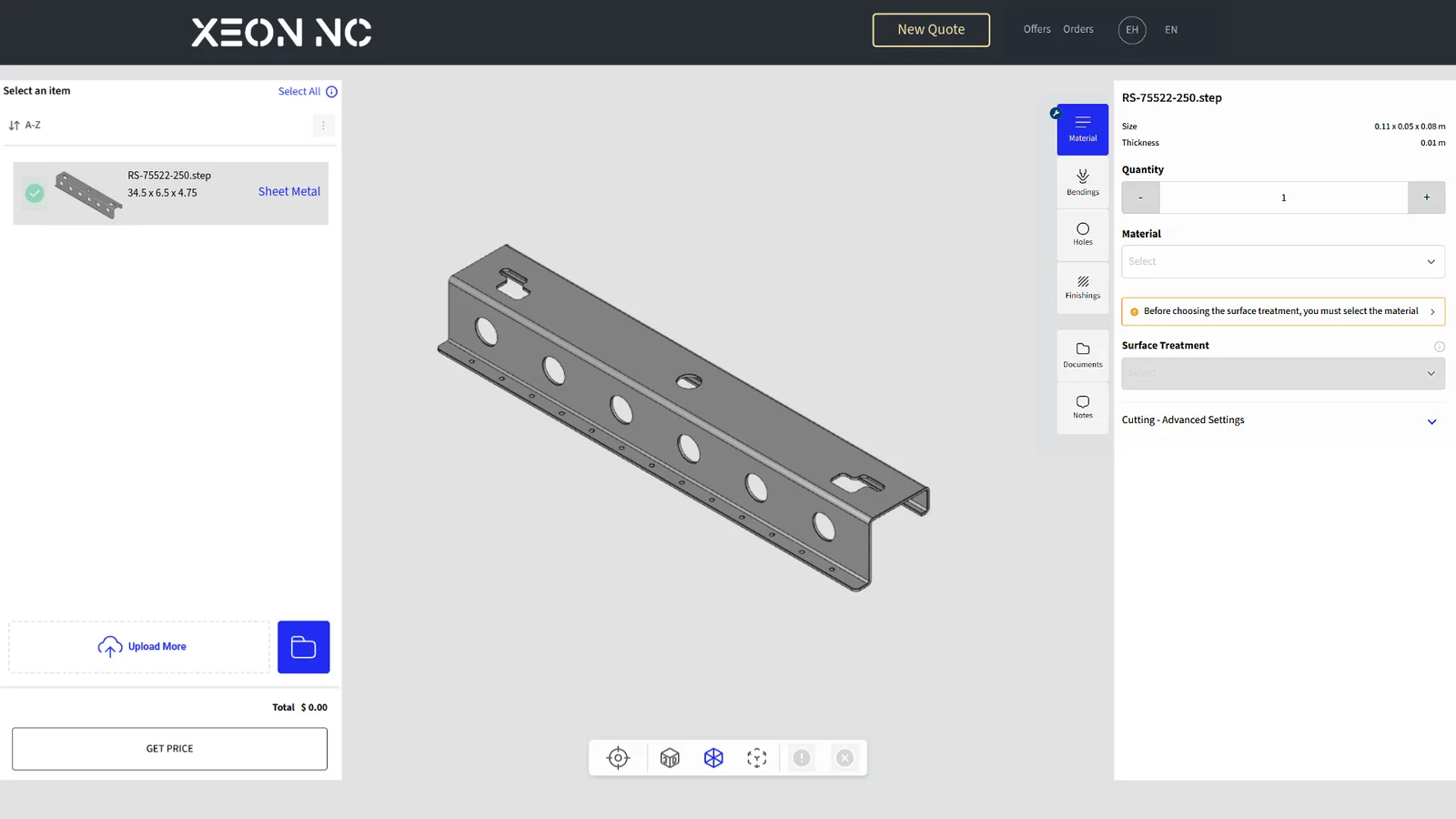
For supported sheet-metal work, the instant quoting system analyzes the uploaded model and can return a firm price in under 60 seconds. That speed is not the end state. It is the opening move. It gives the builder enough information to decide, revise, or proceed while the problem is still active in their mind.
When the work carries complexity that software should not guess at, applications engineering can review the part and its requirements. The point is not to remove human judgment. The point is to concentrate it where judgment creates value.
Automation should clear clerical delay and make the real production question visible to the person qualified to resolve it.
Useful manufacturing software must carry intent forward.
It must connect what the customer approved to the material selected, the process planned, the revision released, the part produced, and the result verified.
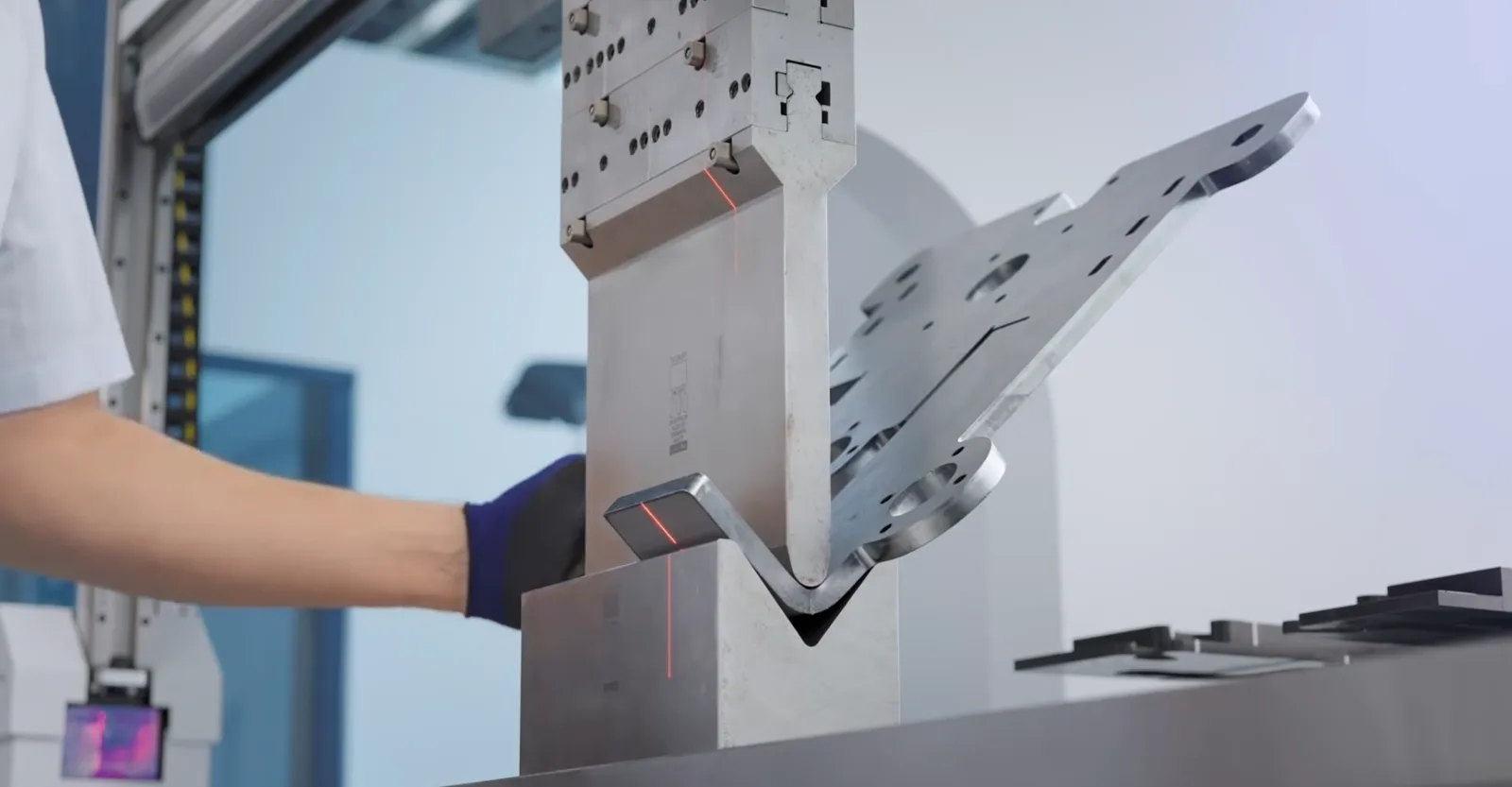
This is the role of the digital thread at Xeon NC. It connects the interface in front of the customer to real machines, real operators, real material, and real production capacity in Nampa, Idaho.
The software does not make manufacturing virtual. It makes the route to physical production more legible.
Hardware is unforgiving. A flange interferes or it does not. A hole aligns or it does not. A finish survives the environment or it does not. Reality closes the argument. The job of the system is to shorten the distance between the decision and that evidence.
Its deeper value is optionality.
When a team can move from CAD to a serious physical part sooner, it can test more ideas before design freeze. It can discover interference before assembly. It can correct a tolerance before volume turns a small mistake into expensive inventory.
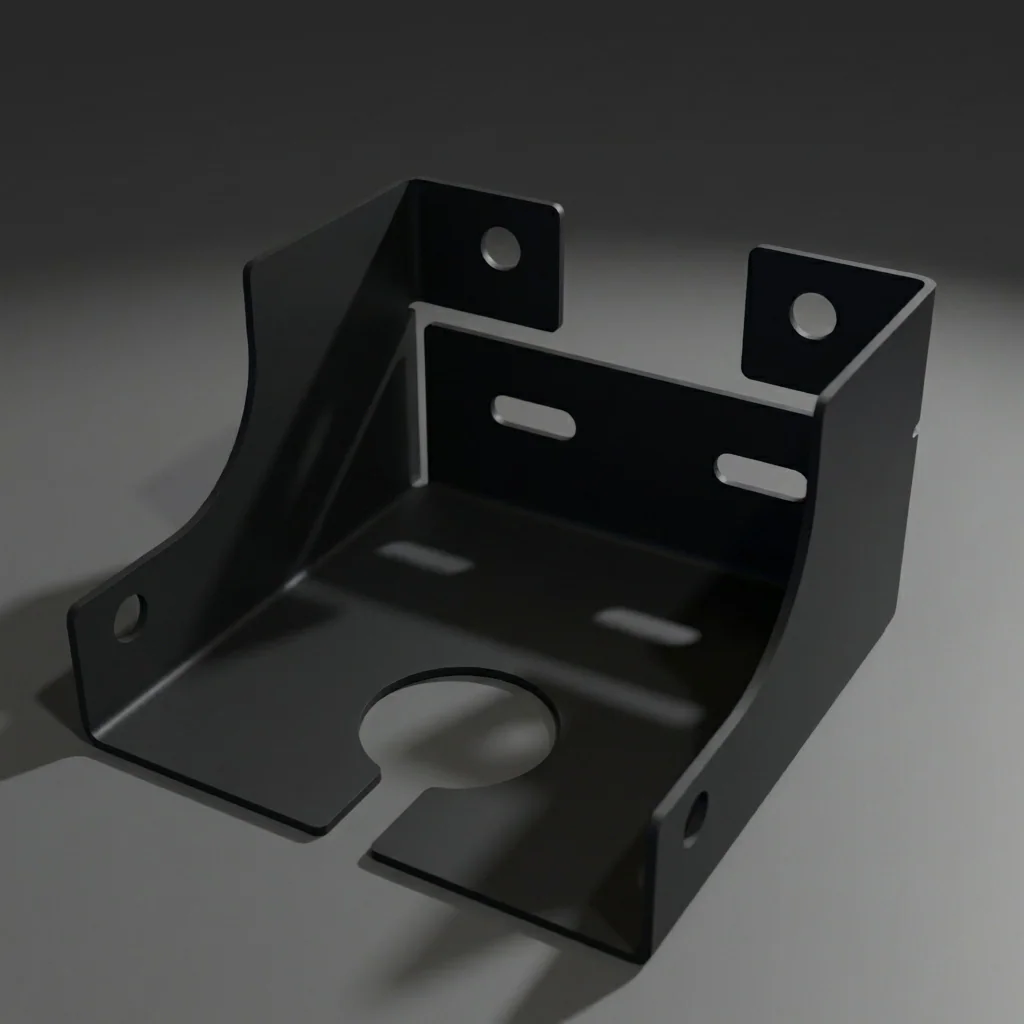
Xeon NC has no minimum order. One part can be enough to answer the next important question. The team can validate it, revise it, and return with a better model. When the design has earned production, the same path can support the next quantity.
Create the production definition.
Turn the model into a real part.
Test fit, function, and finish.
Return with a stronger model.
Produce the design that earned it.
The organization that closes this loop faster does not simply receive parts sooner. It makes better decisions with less speculation.
Its value is not only a label on a box. Its value is proximity.
Proximity shortens communication. It brings engineering and production into a tighter feedback loop. It reduces the distance across which context, revisions, and urgency can disappear. It gives a team another path when a supply chain changes faster than the forecast that created it.
Xeon NC is building that capacity in Nampa, Idaho: an American production system designed to be accessible from one prototype through repeat production.
This is not nostalgia for an older industrial age. It is infrastructure for the next one.
The products ahead of us—energy systems, robotics, aerospace platforms, data infrastructure, transportation, and tools that have not yet been named—will not be delivered by software alone. They will depend on organizations that can convert digital intent into physical output with speed, precision, and control.
The best system makes reality visible enough for the people responsible for it to act.
Automation should remove clerical delay, duplicated entry, and avoidable queues. It should not erase accountability.
The future of manufacturing will not be defined by who owns the most dashboards.
It will be defined by who can turn a decision into verified hardware without losing time, context, or command in between.
Upload the CAD. See the production path. Build the first part. Learn from it. Scale the design that earns it.
The road from idea to reality should not be hidden.
Define the part, see the price, and put the first useful production action in motion.
Start an Instant QuoteIt means maintaining a clear connection between design intent, the approved commercial configuration, production requirements, active revision, physical process, verification, and delivery.
No. Useful automation removes clerical delay, duplicate entry, and avoidable queues while preserving human judgment wherever ambiguity or production risk carries real consequence.
For supported sheet-metal work, the Xeon NC instant quoting system can analyze an uploaded model and return a firm price in under 60 seconds.
Yes. Xeon NC has no minimum order. Begin with one part, validate it, revise the design, and scale when the part is ready.
Upload the CAD, create the evidence, and keep command of the path from first part to repeat production.
Start an Instant Quote