Laser Cutting at Xeon NC
Precision sheet metal cutting powered by TRUMPF technology
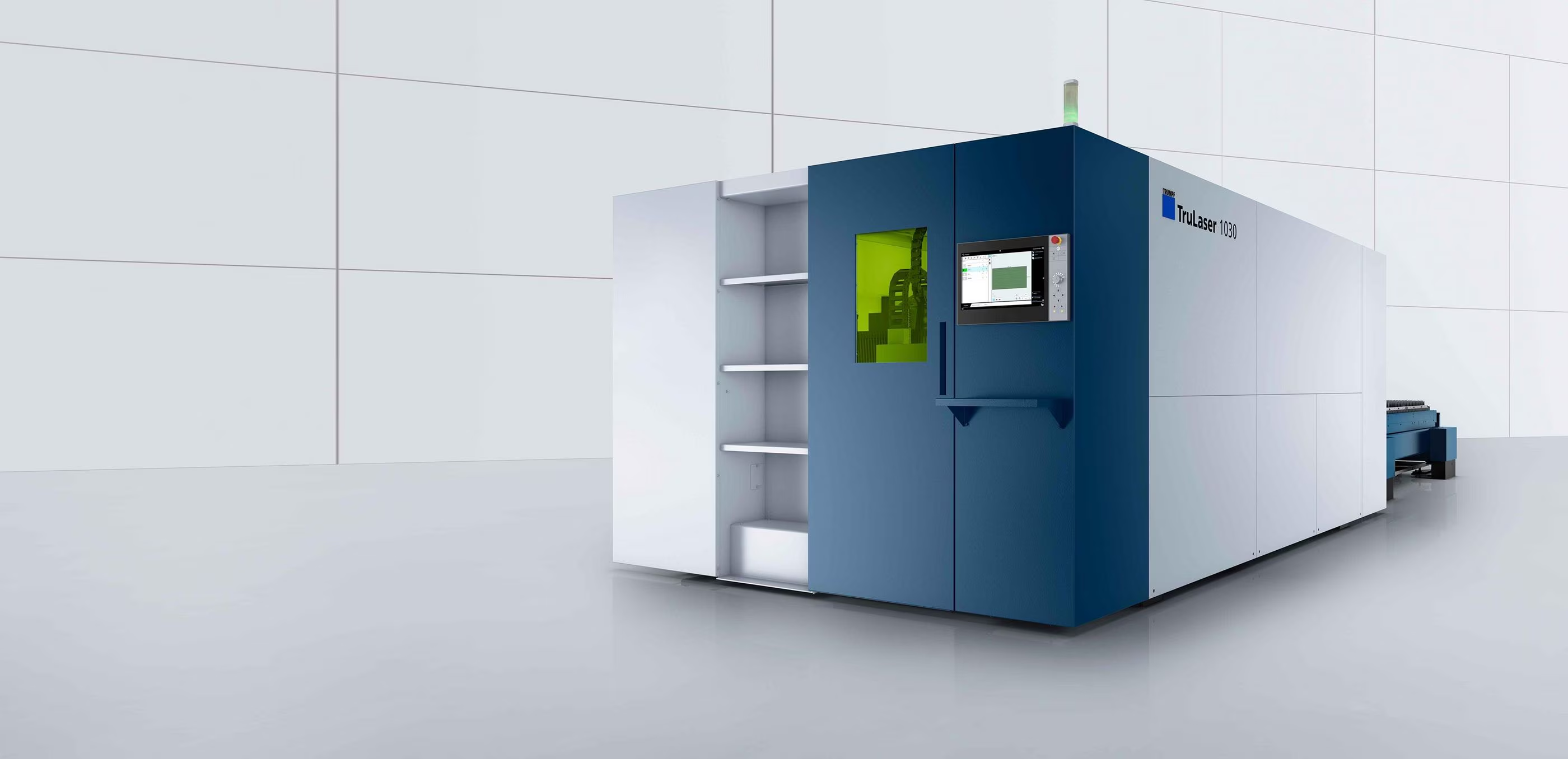
At Xeon NC, laser cutting is one of the core processes that drives our manufacturing workflow. It is how flat sheet metal becomes production-ready parts with speed, repeatability, and tight dimensional control.
We use TRUMPF laser cutting technology to process sheet metal with a high level of accuracy, edge quality, and consistency. For customers, that means cleaner parts, faster turnaround, and a more reliable path from CAD file to finished component.
This page breaks down what laser cutting is, how the process works, what materials can be cut, how assist gases affect the cut, how nozzle and cutting parameter selection influence quality, and what the nesting process looks like before a sheet ever reaches the machine.
What is laser cutting?
Laser cutting is a non-contact manufacturing process that uses a highly focused beam of light to cut through material. In sheet metal fabrication, that beam is directed onto the surface of the sheet, where it heats the material rapidly until it melts or, in certain cases, reacts with the assist gas and cuts through the part geometry.
Because the process is digitally programmed, laser cutting is ideal for producing complex flat patterns, holes, slots, tabs, and production-ready profiles directly from CAD data.
Why laser cutting matters
Laser cutting is widely used because it delivers a strong combination of:
- High accuracy and tight tolerances
- Clean edge quality minimizing post-processing
- Fast processing speeds for production scaling
- Repeatable production results across large batches
- Efficient use of material through algorithmic nesting
- Excellent performance on complex geometries
For modern sheet metal manufacturing, it is one of the most efficient ways to convert digital design into physical parts.
How laser cutting works
The process starts with a CAD file. Once the part geometry is prepared, the machine program defines the cutting path, pierce points, feed rates, gas selection, and other process parameters.
Inside the machine, the laser beam is focused through the cutting head and directed onto the sheet metal surface. At the same time, an assist gas is delivered through the nozzle. The laser provides the energy to melt or initiate the cut, while the assist gas helps remove molten material from the kerf and stabilize the cutting zone.
The cutting head then follows the programmed toolpath across the sheet, producing the final profile with high speed and precision.
In simple terms
1. File Prep
A part file is imported from CAD.
2. Nesting
The geometry is prepared and nested onto a sheet.
3. Setup
Cutting parameters are assigned based on material and thickness.
4. Execution
The laser pierces the sheet and follows the programmed path.
5. Evacuation
Assist gas clears the molten material from the cut.
6. Separation
Finished parts are removed from the sheet skeleton.
What materials can be cut with laser cutting?
Laser cutting is highly effective across a wide range of sheet metals. At Xeon NC, the process is especially valuable for producing precision components in common industrial alloys used in enclosures, brackets, structural parts, covers, machine components, and production assemblies.
Common sheet metal categories
- Carbon steel highly reactive to oxygen-assisted cutting, fast turnaround
- Stainless steel requires high power and nitrogen for a clean, oxide-free edge
- Aluminum high reflectivity demands fiber laser technology with tuned parameters
- Galvanized steel processed efficiently with appropriate ventilation and focus
Why material selection matters
Different materials behave differently under the beam. Aluminum, stainless steel, and mild steel do not cut exactly the same way. Each material requires its own process strategy, including gas choice, nozzle selection, focal settings, and cutting parameters.
That is why production-grade laser cutting is not just about raw laser power. It is about matching the machine setup to the specific material and thickness being processed.
Assist gases: what they do and why they matter
Assist gas is a critical part of laser cutting. It does much more than blow air at the cut.
The assist gas helps:
- Remove molten material from the kerf
- Support cut stability
- Influence edge finish
- Affect oxidation and discoloration
- Improve or reduce burr formation depending on setup
- Protect process consistency at speed
At Xeon NC, gas selection is made based on the material, thickness, part requirements, and desired edge condition.
Nitrogen
Nitrogen is commonly used when a cleaner, lower-oxidation cut edge is required. It is especially useful when part appearance, weld preparation, downstream finishing, or corrosion-sensitive surfaces matter.
Because nitrogen is non-reactive in the cutting zone, the cut relies more directly on laser energy and gas pressure to evacuate molten metal cleanly.
Oxygen
Oxygen is often used for cutting certain steels because it actively supports the cutting process. In the right application, it can help with cutting thicker material efficiently.
The tradeoff is that oxygen-assisted cutting typically produces a more oxidized edge than nitrogen cutting.
Compressed air
Compressed air can be useful in the right production scenario, especially where speed and cost control are important and where the final edge condition is acceptable for the application.
Nozzles, laser tips, and cutting parameter control
Clean laser cutting does not happen by accident. It comes from process control.
One of the most important components in the cutting system is the nozzle. This is the point where the laser beam and the assist gas are delivered to the workpiece. Nozzle condition, size, alignment, and application fit all matter.
At Xeon NC, the cutting setup is matched to the job. Different materials and thicknesses may call for different nozzle configurations and parameter strategies to maintain edge quality and stable processing.
Why nozzle selection matters
Nozzles influence gas flow behavior, kerf evacuation, cut stability, pierce quality, edge cleanliness, and overall process repeatability.
Technology tables and cut parameters
Laser cutting also depends on machine parameter sets, often referred to as technology data or tech tables. These parameter sets define how the machine should cut a given material and thickness.
They can include variables such as:
- Feed rate
- Pierce strategy
- Focus position
- Gas pressure
- Nozzle type
- Power level
- Lead-ins and lead-outs
- Corner behavior
What does the nesting process look like?
Before a part is cut, it must be nested onto a sheet.
Nesting is the process of arranging multiple parts on a sheet in a way that makes efficient use of material while still preserving cut quality, part separation, and manufacturability. It is one of the most important digital steps in sheet metal production.
At Xeon NC, nesting is not just about fitting shapes together. It is about balancing material utilization, machine efficiency, cut sequencing, skeleton stability, and downstream part handling.
What nesting takes into account
A good nest considers sheet size, material type and thickness, part quantity, grain direction when required, part spacing, common cut opportunities where appropriate, heat distribution, cut sequence, microtabs or part retention strategy when needed, and ease of unloading and sorting.
Why nesting matters
Better nesting can improve material utilization, cost efficiency, throughput, part consistency, and production flow.
In short, good nesting is where software, production planning, and machine execution start to align.
From digital file to production-ready part
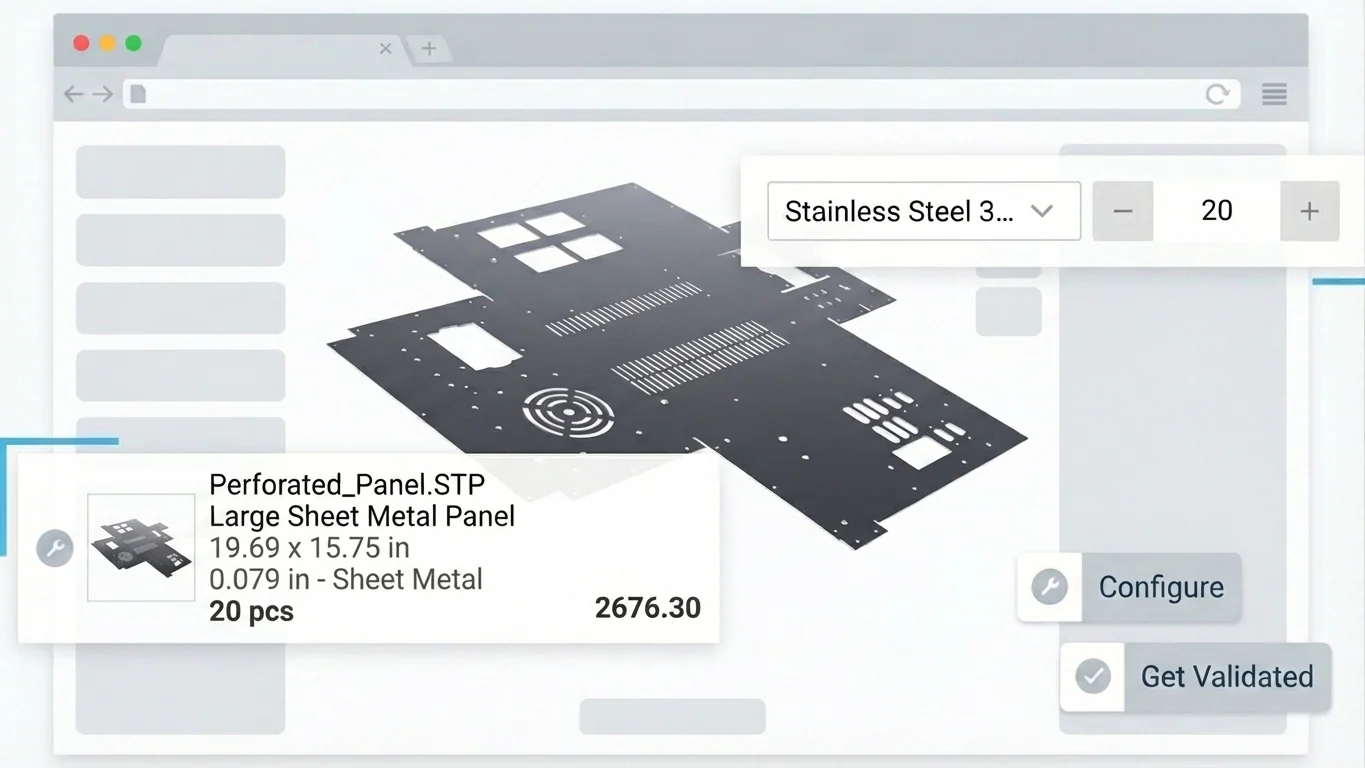
Laser cutting is one of the clearest examples of digital manufacturing in action. A customer uploads or submits a design. The geometry is prepared. The job is nested, programmed, and matched to the right cutting parameters. Then the TRUMPF laser system converts that digital file into physical parts with speed and repeatability.
That combination of software, machine control, process knowledge, and production discipline is what turns laser cutting from a basic service into a reliable manufacturing capability.
At Xeon NC, we treat laser cutting as more than a machine operation. It is part of a larger digital workflow built around precision, speed, and production quality.