// HP Multi Jet Fusion Material

Nylon
PA-12
MJF

HP's industrial powder-bed fusion process produces PA-12 parts with near-isotropic mechanical properties, crisp feature resolution, and zero support structures. The go-to material for complex functional end-use parts, snap-fits, fixtures, and enclosures.

48MPa Tensile
±0.3mm Accuracy
ISO11600 Certified
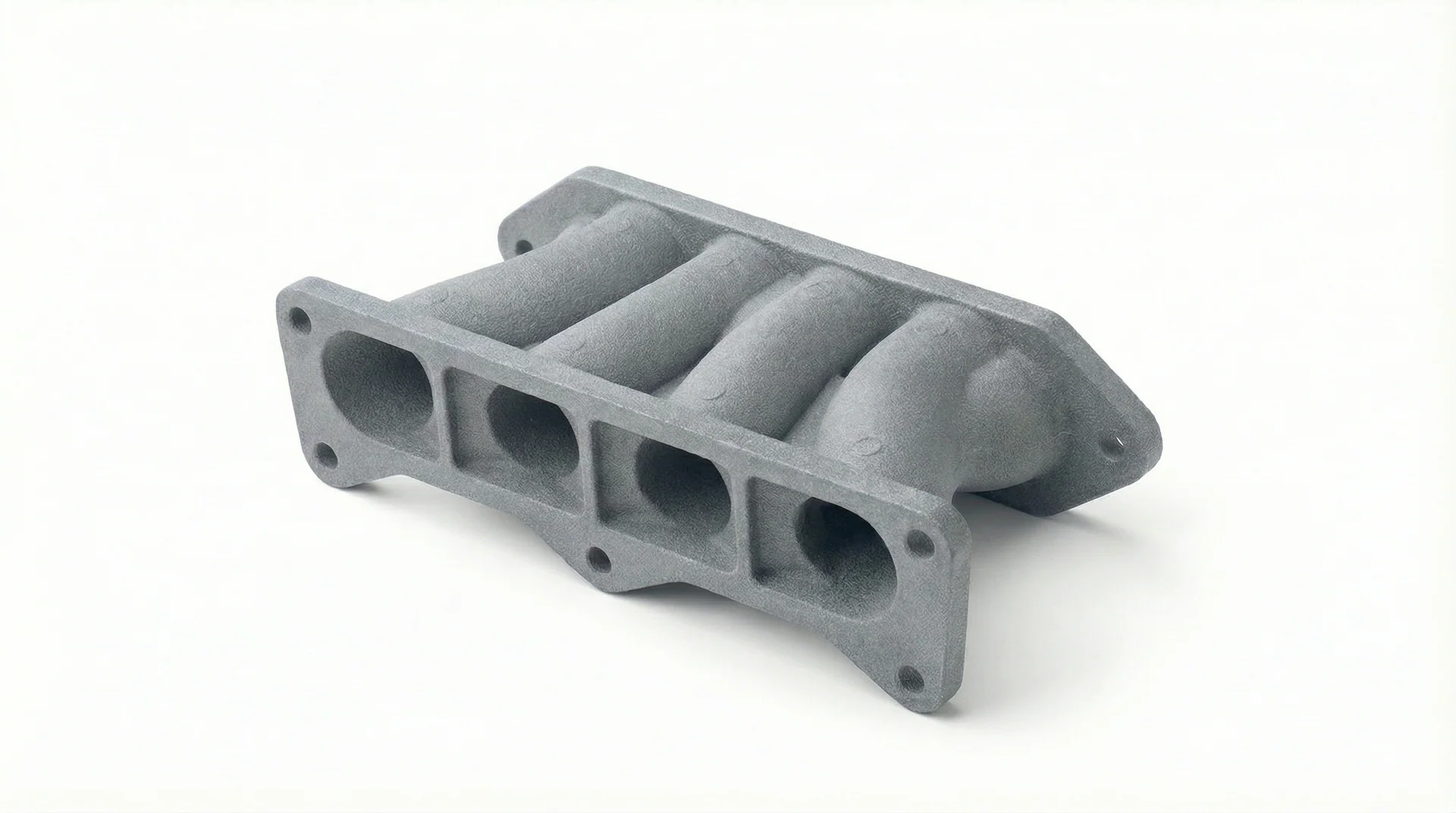
HP MJF Nylon PA-12 printed parts
Properties Build Volume Surface Finishes Design Guidelines Post-Processing FAQ
// Material Science
PA-12 Mechanical Properties
Data per HP Material Data Sheet (MDS) for PA 12 on HP MJF 5200 series. XY and Z directions reported — near-isotropic due to MJF's thermal agent process.
Tensile Strength (XY)
48
MPa (6,960 psi)
Tensile Strength (Z)
48
MPa — near isotropic
Elongation at Break (XY)
20%
ASTM D638
Elongation at Break (Z)
15%
ASTM D638
Flexural Modulus
1,700
MPa (246 ksi)
Impact Strength (Charpy)
53
kJ/m² notched
Heat Deflection Temp
175
°C @ 0.45 MPa
Density (printed)
1.01
g/cm³
Why MJF is near-isotropic. Unlike FDM or SLA which build layer-by-layer with directional fiber bonds, HP's MJF process uses a fusing agent that heats the full layer cross-section simultaneously. This produces interlocked crystalline boundaries between layers — resulting in Z-direction strength within 5–10% of XY direction.
PA-12 chemical resistance. Resistant to hydrocarbons, greases, oils, fuels, many solvents, and dilute acids/bases. Excellent fatigue resistance for cyclic loading applications. Not recommended for sustained exposure to strong acids, aldehydes, or ketones.
Rated Performance vs. Common 3D Print Materials
Tensile Strength85/100
Impact Resistance90/100
Surface Detail88/100
Chemical Resistance80/100
Isotropy92/100
Geometric Complexity95/100
Key Compliance & Standards
ISO 11600HP Certified Powder
ASTM D638Tensile Testing
ASTM D790Flexural Properties
RoHS CompliantYes
UL 94HB classification
// Machine Envelope
Build Volume & Tolerances
Xeon NC operates HP MJF 5200 printers. Maximum build volume and achievable tolerances shown below. Larger parts may be split and bonded.
// Maximum Build Envelope — HP MJF 5200
380 × 284 × 380
mm
14.96 × 11.18 × 14.96 inches  ·  X × Y × Z axes
X Axis (Width)
380 mm
14.96 in
Y Axis (Depth)
284 mm
11.18 in
Z Axis (Height)
380 mm
14.96 in
380mm X 380mm Z 284mm Y
Standard Accuracy
± 0.3 mm or ± 0.3%
Whichever is greater. Applied to all linear dimensions. Standard for most functional and structural parts.
DimensionTolerance
≤ 100 mm± 0.30 mm
100 – 200 mm± 0.30 – 0.60 mm
> 200 mm± 0.3% of dim
Layer Resolution
Layer Thickness
0.08 mm
Min Feature Size
0.5 mm
Min Wall Thickness
1.0 mm
Min Hole (thru)
1.5 mm
No support structures required. MJF uses unfused powder as its own support material — enabling complex undercuts, channels, and internal geometries with no cleanup.
// Surface Quality
Surface Finishes Available
All parts are bead-blasted as standard. Additional post-processing options below — select only what your application requires.
Natural Gray (As-Built)
Ra ≈ 8–12 µm
Bead-blasted uniform gray surface. Slight visible layer lines on steep vertical faces. Best value — included in base price. Functional for most structural applications.
Dyed Black
Ra ≈ 8–12 µm · Deep penetration
Water-based dye penetrates 0.5–1 mm into the surface — not just a surface coat. Uniform flat black. UV-stable for indoor use. Does not change dimensional accuracy.
Vapor Smoothed
Ra ≤ 1.5 µm · Near gloss
Chemical vapor smoothing reflows the outer surface to near-injection-molded quality. Improved watertightness, reduced friction, and enhanced aesthetics. Slight dimensional change (~0.1 mm per surface).
🎨
Painted (RAL/Pantone)
Ra ≈ 3–6 µm after primer coat
Primer coat followed by color topcoat. Supports any RAL or Pantone color. Typical thickness +0.1–0.2 mm per side. Ideal for cosmetic and marketing parts.
Electroless Metal Plated
Copper · Nickel · Chrome
Electroless copper or nickel plating over primed PA-12. Creates a conductive, metallic-look surface. Used for EMI shielding, decorative metallics, and conductive traces.
💧
Watertight Sealing
Epoxy / urethane internal coat
Internal channel and surface coating for pressure-tested fluid passages, tanks, and manifolds. Required for any liquid-contact or low-pressure pneumatic application.
// Engineering Guidelines
MJF Design Guidelines
Key design rules for HP MJF PA-12 to achieve optimal part quality, accuracy, and printability. Refer to infographics for visual reference.
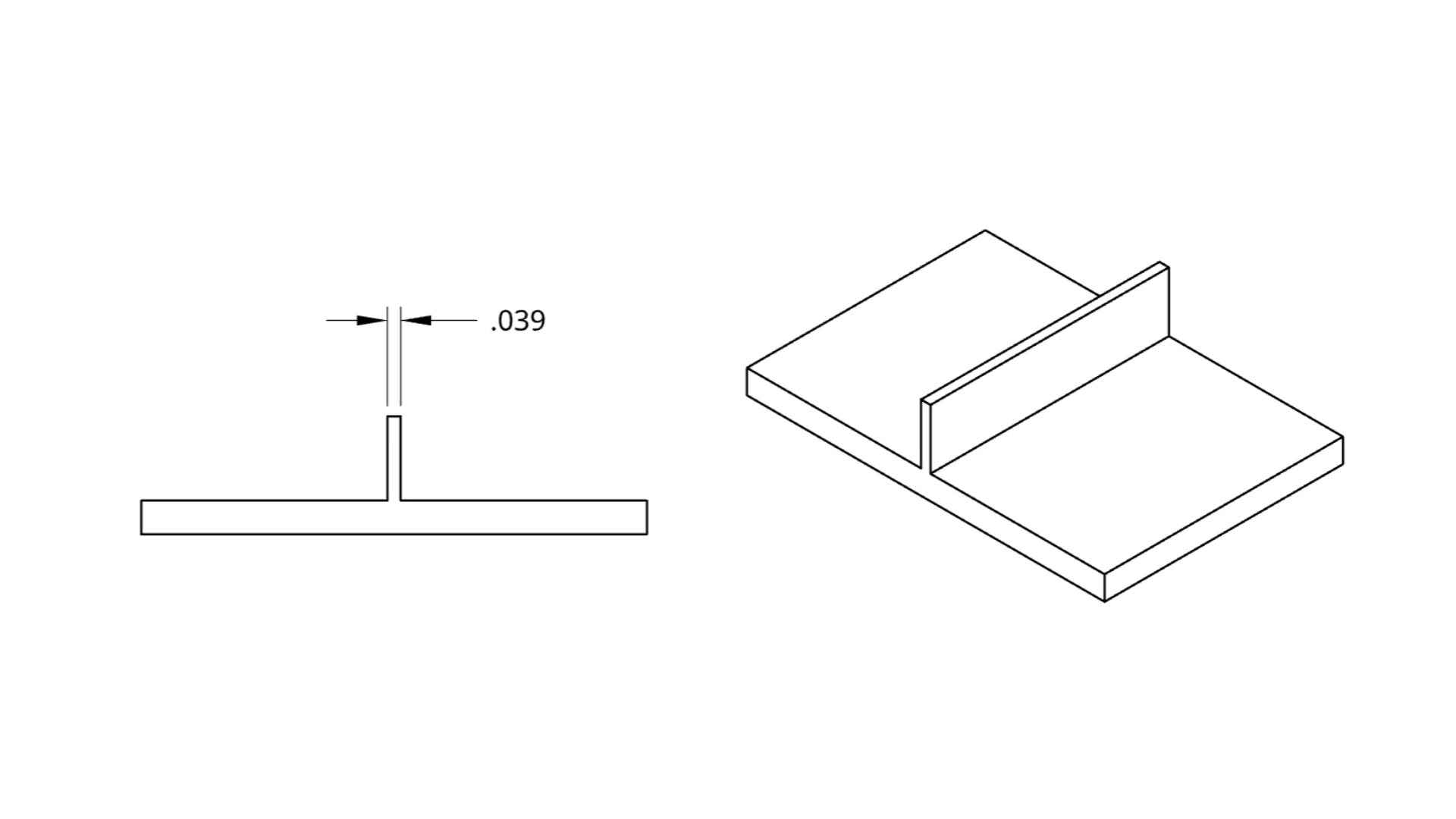
📐 Minimum Thickness & Thin Walls
Minimum thickness design guide
Min Supported Wall1.0 mm
Min Unsupported Wall1.5 mm
Rec. for Strength2.0 mm+
Min Embossed Detail0.5 mm high
Min Engraved Detail0.5 mm deep / wide
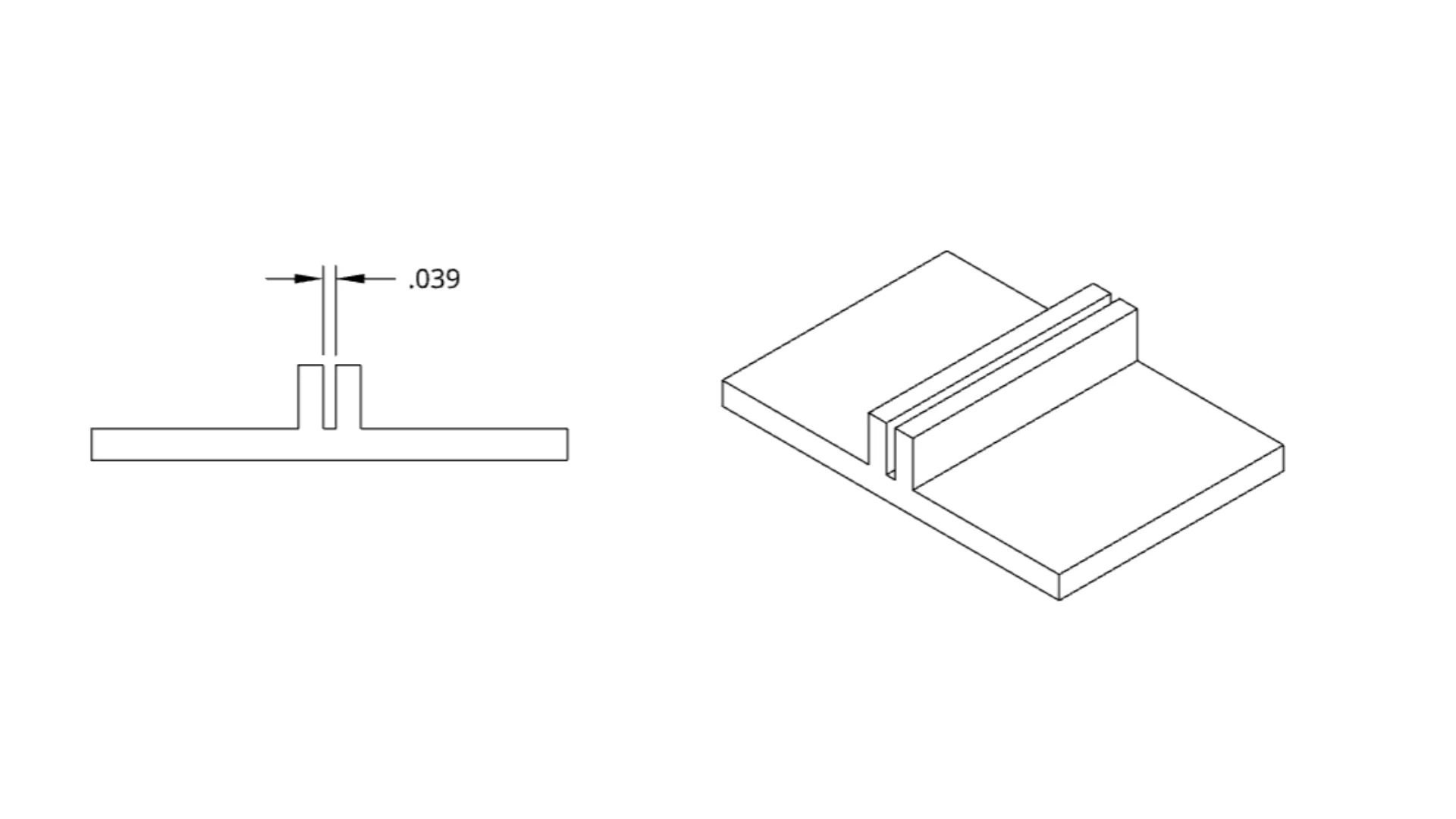
Holes, Channels, Gaps & Undercuts
Holes and channels design guide
Min Through Hole Ø1.5 mm
Min Blind Hole Ø2.0 mm
Min Slot / Channel Width1.5 mm
Min Escape Hole (hollow)3.5 mm Ø
Undercut CapabilitySupported (no extra cost)
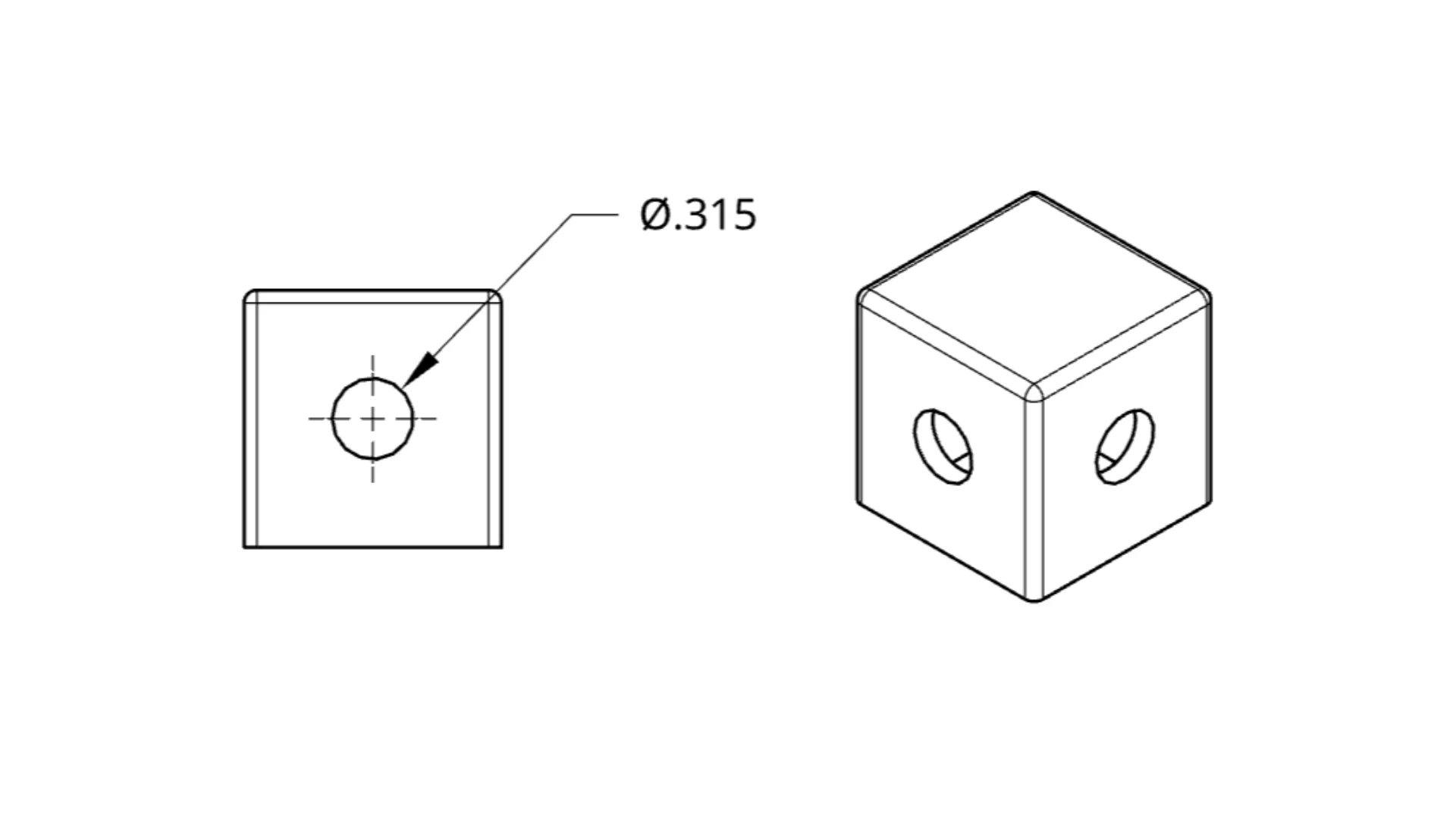
🔲 Massive Parts & Voids
Large parts and hollowing guide
Solid Part Shell Rec.Hollow if > 20 mm wall
Min Hollow Shell Wall3.0 mm
Powder Escape Hole≥ 2 holes × ≥ 3.5 mm Ø
Max Solid Section (warping risk)> 50 mm → hollow
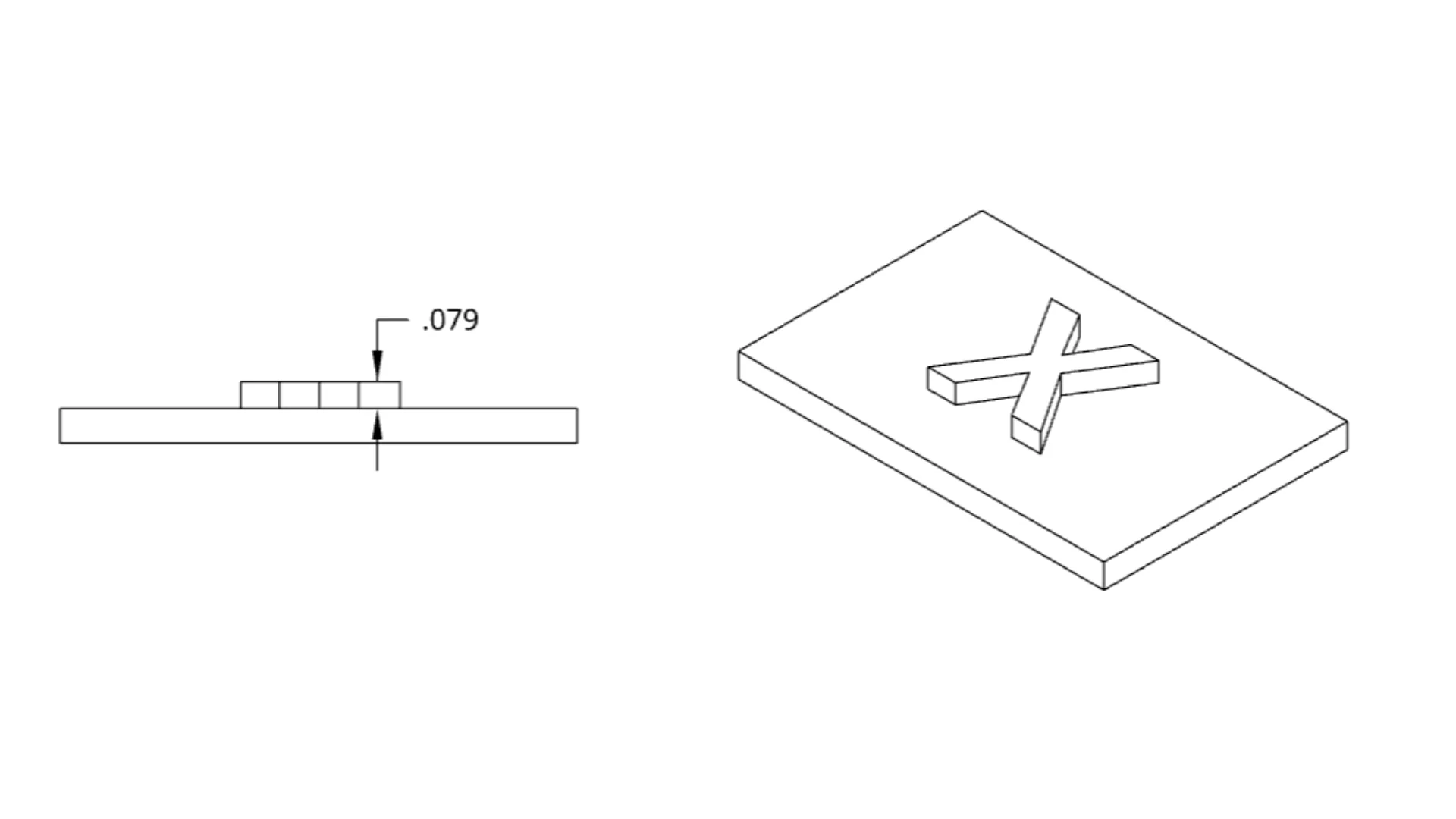
🔤 Text, Logos & Fine Features
Text and logo design guide
Min Embossed Text Height1.0 mm
Min Embossed Text Depth0.5 mm
Rec. Font Width (stroke)≥ 0.8 mm
Logo/Image Min Size5 × 5 mm
Best Orientation for TextUpward facing (XY plane)
// Post-Processing
Available Post-Processing
All post-processing is performed in-house or by qualified partners. Lead times are additive to base print time.
💨
Bead Blasting
Removes excess powder and creates uniform matte gray surface. Included with every part at no extra charge.
🖤
Dyeing
Black dye or custom colors. Penetrates the surface for durability. Does not affect tolerances.
Vapor Smoothing
Chemical vapor reflow — produces Ra ≤1.5 µm near-gloss surface. Improves watertightness and aesthetics.
🎨
Painting
Primer + topcoat in RAL or Pantone colors. Recommended over vapor-smoothed surface for best adhesion.
Metal Plating
Electroless copper, nickel, or chrome. Creates conductive surfaces for EMI/RFI shielding or decorative metallic finishes.
🔩
Threaded Inserts
Heat-set brass inserts pressed into designed bosses. M2–M8 inserts available. Recommended over direct threading.
💧
Watertight Sealing
Internal epoxy or urethane coating for fluid passages, tanks, and manifolds. Tested to 2 bar (29 psi).
📐
CNC Post-Machining
Critical bores, threads, and mating surfaces post-machined to ±0.05 mm. Ideal for bearing seats and precision fits.
// Common Questions
PA-12 MJF FAQ
Engineering and ordering questions answered.
How does MJF compare to SLS Nylon?
+
HP MJF and SLS both use powder-bed fusion with nylon, but MJF uses a fusing agent applied by inkjet printheads rather than a laser. MJF is generally faster (full-width pass per layer), produces more consistent surface finish, and achieves better isotropy due to the uniform thermal profile. Mechanical properties are very similar — MJF PA-12 is slightly superior in elongation at break. Both require no supports and can print complex internal geometries.
Is PA-12 MJF food safe?
+
HP PA-12 MJF material meets the chemical requirements under FDA 21 CFR and EU 10/2011 for food contact. However, the porous as-built surface can harbor bacteria, so bare PA-12 should not be used for repeated direct food contact without a food-safe sealing coat (vapor smoothing + food-grade epoxy). Always verify compliance for your specific application with a food safety engineer.
What is the best finish for snap-fit or living hinge features?
+
Natural gray as-built is recommended for snap-fit and living hinge features — vapor smoothing or other coatings can slightly alter surface characteristics and may reduce fatigue life in high-cycle designs. Keep hinge thickness at 0.7–1.0 mm and ensure the flex geometry is oriented in the XY plane for best elongation properties. Design your hinge to stay within the elastic zone (strain < 5% for PA-12).
Can I thread directly into PA-12 MJF printed parts?
+
Yes — PA-12 can be tapped after printing. For M3 and larger, design a boss with proper pre-drill hole size and tap using a hand tap or CNC. For repeated assembly/disassembly, heat-set brass threaded inserts (available as a post-processing option) are strongly recommended — they provide much longer thread life and higher torque resistance than tapped nylon.
What file formats do you need for 3D printing?
+
We accept STL, STEP (.stp/.step), OBJ, and native SolidWorks (.sldprt) files. STL is preferred for 3D printing — ensure it is watertight (manifold) with no inverted normals before submitting. STEP files are useful when you need clean CAD geometry for post-machining reference. Minimum feature size on your model should be ≥ 0.5 mm — smaller features may not print reliably.
Ready to print in Nylon PA-12 MJF?
Upload your STL or STEP file — our engineers review for printability and suggest optimizations before quoting.
Get a Quote →