Back to All Materials
// Material Catalog

Stainless
Steel

Premium corrosion-resistant alloys for demanding environments. Compare 304, 316, and 430 grades — understand their properties, select the right thickness, and choose secondary services.

3Alloy Grades
13Thicknesses
7Services
Stainless Steel Laser Cutting
Grades & Comparison Thicknesses Properties Services Chemical Composition FAQ
// Grade Comparison
Pick the Right Stainless
Not all stainless is the same. Each grade carries unique corrosion, strength, and fabrication trade-offs. Compare them side-by-side to choose the right alloy for your application.
Austenitic · Marine Grade
$$$$$
316 Stainless
Superior chemical and marine resistance with added molybdenum.

Pros

Marine-grade — resists chlorides and saltwater
Pharmaceutical / chemical environment rated
Marginally more ductile than 304 for forming
Better pitting resistance at elevated temperatures

Cons

15–20% more expensive than 304
Fewer in-stock thickness options
Density
8.00 g/cm³
Tensile
75 ksi
Finish
2B Mill
Weldable
Yes
Ferritic · Budget
$$$$$
430 Stainless
Economical magnetic stainless with good oxidation resistance.

Pros

Most economical stainless grade
Magnetic — useful for fixture-held assemblies
Good oxidation resistance at moderate temps

Cons

Cannot be reliably welded (carbide precipitation)
Significantly lower corrosion resistance than 304/316
Limited thickness availability
Density
7.70 g/cm³
Tensile
65 ksi
Finish
2B Mill
Weldable
Limited
// Stock Availability
Thickness & Gauge Options
All stainless sheet is stocked in 48″ × 96″ full sheets. Laser cutting tolerance is ±0.005″ on all gauges.
304 Stainless
316 Stainless
430 Stainless
Gauge Thickness Decimal (in) Metric (mm) Sheet Size Stock

💡 Click any row for full specs, bend limits, and laser tolerances.

Gauge Position — Thin to Thick
Thickness
Thickness Tolerance i
Material
Type
Alloy
Finish i
Protective Film
Max Part Size i
Min Part Size
Min Recommended Hole i
Min Hole Size (absolute)
Min Channel Width i
Min Wall Thickness i
Max Aspect Ratio i
Kerf (Laser Cut Width) i
Cut Tolerance±0.005"
Assist Gas iN₂ (Nitrogen)
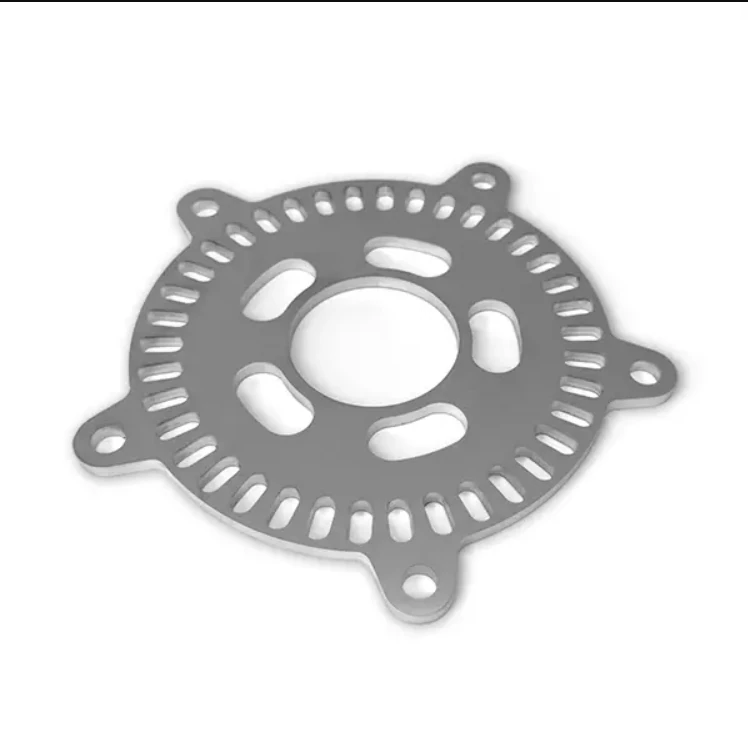
    Stainless steel laser cut part
    Stainless Steel · Laser Cut Part · #2B Finish XEON NC SHOP PHOTO
    Sheet size: 48″ × 96″ · Lead time: 3–5 business days
    * Properties not guaranteed. For reference comparison only — not for design-critical specifications.
    Tensile Strength (Ultimate) i
    Tensile Strength (Yield) i
    Shear Strength i
    Shear Modulus i
    Fatigue Strength i
    Brinell Hardness i
    Elongation at Break i
    Elastic Modulus i
    Poisson's Ratio i
    Density
    Ready to order this thickness? Upload your DXF for an instant quote — our engineers verify material compatibility before production.
    Get an Instant Quote →
    // Material Science
    304 Stainless Steel Properties
    Mechanical, thermal, and physical characteristics. Data reflects annealed condition per ASTM A240.
    Tensile Strength
    73
    ksi (505 MPa)
    Yield Strength
    31
    ksi (215 MPa)
    Elongation
    40%
    in 2 inches
    Hardness
    92
    Rockwell B
    Density
    8.00
    g/cm³ (0.289 lb/in³)
    Melting Point
    2,550
    °F (1,399 °C)
    Thermal Conductivity
    9.4
    BTU/hr·ft·°F
    Max Use Temp
    1,600
    °F continuous

    Grade Comparison

    // Fabrication Services
    Available for Stainless Steel
    Every secondary service we offer is compatible with stainless steel. Select services during the quoting process.
    Fiber Laser Cutting
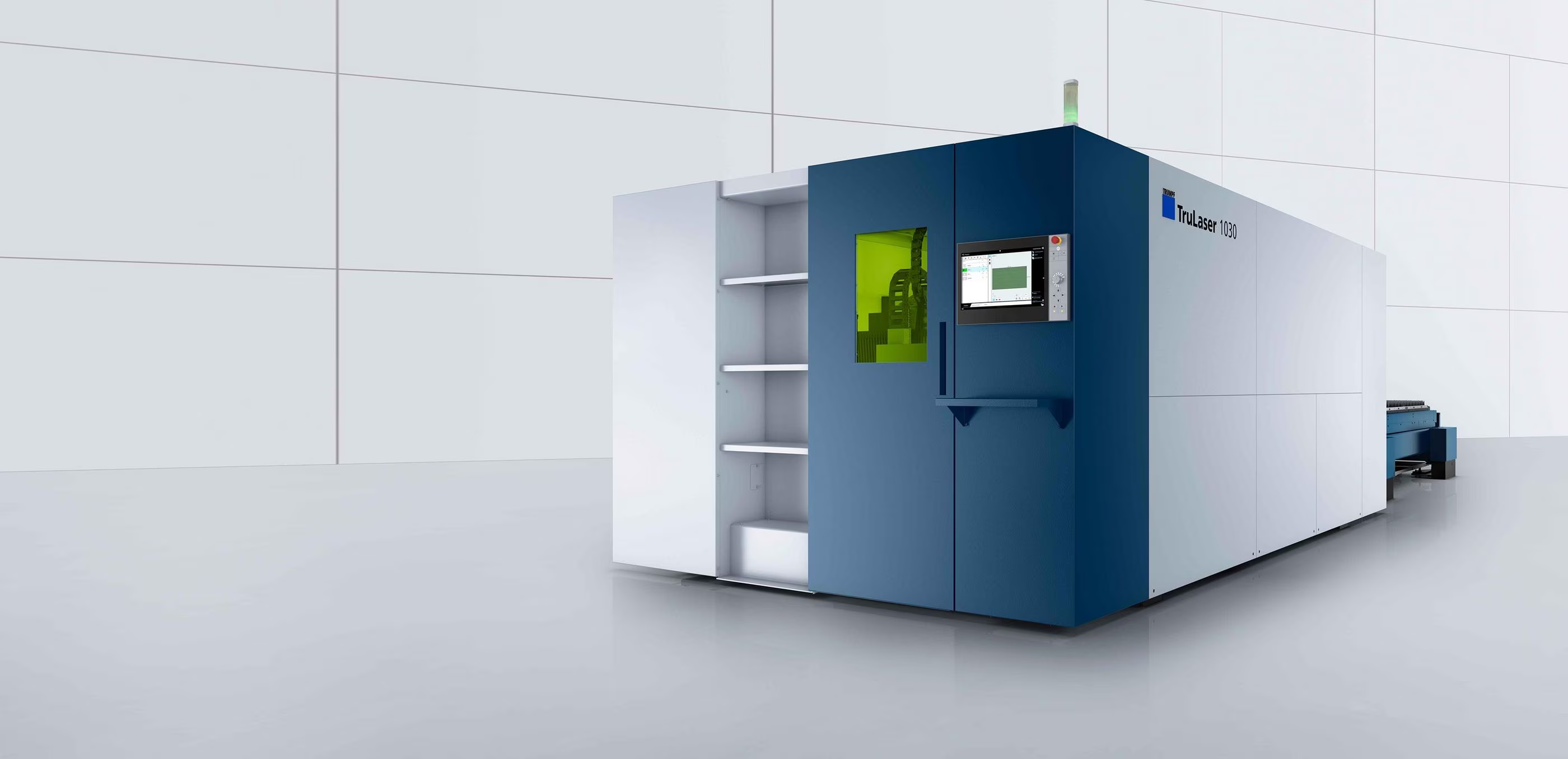
    High-speed precision cutting on our TRUMPF fiber laser with nitrogen assist for oxide-free edges.
    CNC Bending
    Precision press brake forming up to 1/8″ stainless. Tight radii available on thin gauges.
    Countersinking
    82° and 90° countersinks for flush-mount fastener hardware.
    Tapping
    Thread holes directly into the sheet for blind or through-hole hardware attachment.
    Hardware Insertion
    PEM press-fit nuts, studs, and standoffs pressed into the sheet during fabrication.
    Deburring
    Edge smoothing to remove sharp burrs left from the laser cutting process.
    🎨
    Powder Coating
    Electrostatically applied powder coat in 10+ colors. Stainless requires primer for adhesion.
    Welding
    TIG welding on 304 and 316 grades. 430 has limited weldability — consult engineering.
    // Metallurgy
    Chemical Composition
    The elemental makeup of each grade directly determines its corrosion resistance, weldability, and cost. Understanding the chemistry helps you pick the right alloy — not the most expensive one.
    Elemental Breakdown by Grade (% Weight, nominal)
    Iron (Fe)
    Chromium (Cr)
    Nickel (Ni)
    Molybdenum (Mo)
    Other (Mn, Si, C…)
    Chromium is the key to stainless. All three grades contain 16–18% chromium — it reacts with oxygen to form the passive oxide layer that prevents rust. Drop below ~10.5% and it's no longer stainless.
    316 adds 2–3% Molybdenum. This single addition dramatically improves chloride and pitting resistance — making 316 the standard for marine, pharmaceutical, and chemical environments.
    430 contains no Nickel. Nickel stabilizes the austenite crystal structure, enabling better ductility and weldability. Without it, 430 becomes ferritic — lower cost, magnetic, but more brittle.
    Element 304 316 430 Role
    Iron
    Fe — Base
    Bal. Bal. Bal. Matrix & structural base
    Chromium
    Cr — 18–20%
    18–20% 16–18% 16–18% Passive oxide layer — corrosion resistance
    Nickel
    Ni — Austenite
    8–10.5% 10–14% None Austenite stabilizer — ductility, weldability
    Molybdenum
    Mo — Marine
    None 2–3% None Chloride/pitting resistance — marine environments
    Manganese
    Mn — Deoxidizer
    ≤ 2.0% ≤ 2.0% ≤ 1.0% Deoxidizer, improves hot workability
    Silicon
    Si — Deoxidizer
    ≤ 0.75% ≤ 0.75% ≤ 1.0% Deoxidizer, oxidation resistance
    Carbon
    C — Low
    ≤ 0.08% ≤ 0.08% ≤ 0.12% Controlled — high C reduces weld resistance
    Phosphorus
    P — Trace
    ≤ 0.045% ≤ 0.045% ≤ 0.040% Controlled — excess causes brittleness
    Sulfur
    S — Trace
    ≤ 0.030% ≤ 0.030% ≤ 0.030% Low sulfur = better corrosion resistance

    * Composition ranges per ASTM A240 (sheet/plate). Actual values may vary within ASTM limits.

    304 STAINLESS
    General Purpose
    18% Cr + 9% Ni
    No Mo — indoor/mild outdoor only
    316 STAINLESS
    Marine / Chemical
    17% Cr + 12% Ni + 2.5% Mo
    Mo blocks chloride pitting
    430 STAINLESS
    Budget / Decorative
    17% Cr — no Ni, no Mo
    Ferritic, magnetic, limited weldability
    // Common Questions
    Stainless Steel FAQ
    Frequently asked questions about our stainless steel fabrication capabilities.
    What thicknesses of stainless steel do you stock?+
    We stock 304 stainless in seven thicknesses from 24 gauge (0.024″) through 1/8″ (0.125″). 316 is available in four thicknesses from 22 gauge through 1/8″. 430 is stocked in 22 gauge and 16 gauge. All sheets are 48″ × 96″ full sheets.
    Can you laser cut stainless steel?+
    Yes — our TRUMPF fiber laser cuts all stainless grades we stock. We use high-pressure nitrogen assist gas on stainless steel to produce clean, oxide-free edges that don't discolor. Cutting tolerance is ±0.005″ across all gauges.
    What is the difference between 304 and 316 stainless?+
    316 contains 2–3% molybdenum, which dramatically improves resistance to chlorides and saltwater pitting. If your parts will be exposed to marine, chemical, or pharmaceutical environments, 316 is the safer specification. For general-purpose corrosion resistance in indoor or mild outdoor environments, 304 is more economical and equally reliable.
    How does stainless steel behave when bending?+
    Stainless steel has a high springback factor — the metal partially springs back after the punch retracts. Our press brake programs automatically over-bend to compensate. 304 and 316 bend well in thin gauges (up to ~16 ga). Minimum inside bend radius is typically 1× material thickness. 430 is more brittle and requires wider radii.
    Can stainless steel be powder coated?+
    Yes, but stainless requires a bonding primer before the powder coat will adhere properly. The smooth 2B finish on stainless does not provide enough surface profile for direct powder adhesion. We apply a conversion coating or primer as part of our standard powder coating process for stainless parts.
    Is 430 stainless weldable?+
    430 has limited weldability. It is a ferritic stainless that is prone to grain coarsening and carbide precipitation in the HAZ during welding, which reduces ductility and corrosion resistance in the weld zone. For projects that require welding, we strongly recommend upgrading to 304 or 316.
    What edge quality should I expect from laser-cut stainless?+
    With nitrogen assist gas, laser-cut stainless edges are clean, bright silver, and oxide-free. Edge roughness is typically 125 Ra or better on gauges through 16 ga. Thicker material (14 ga and above) will show slightly more striation on the cut face. If cosmetic edge quality is critical, we recommend our deburring service as a secondary operation.
    Start your stainless steel project today.
    Upload your DXF and receive an instant quote. Our engineers will verify material compatibility before production.
    Get an Instant Quote →
    EXPLANATION & DETAILS
    Information