Back to All Materials
// Material Catalog

Carbon
Steel

Versatile, high-strength alloys for structural and sheet metal applications. Compare A1008, A36, and A1018 grades — understand their properties, select the right thickness, and choose secondary services.

4Alloy Grades
29Thicknesses
7Services
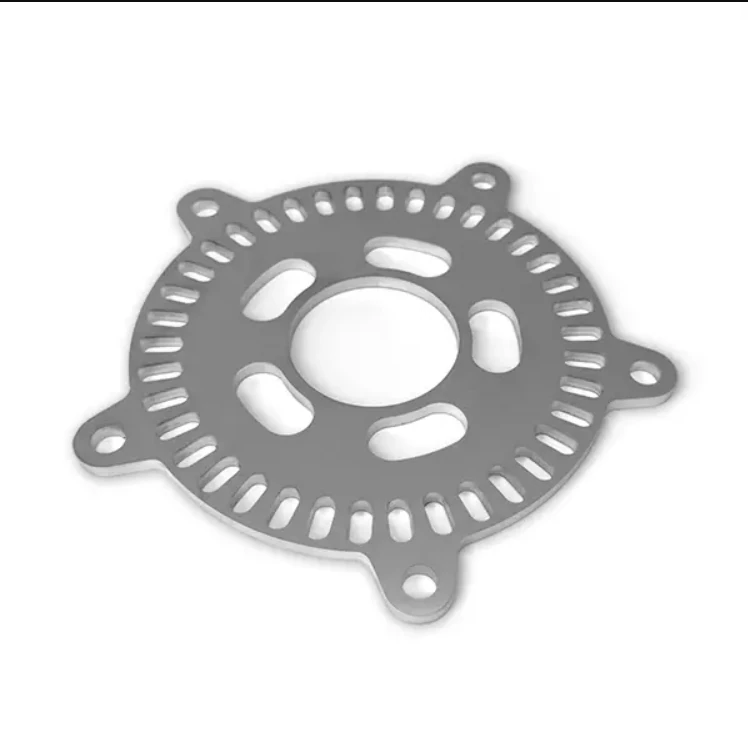
Carbon Steel Laser Cutting
Grades & Comparison Thicknesses Properties Services Chemical Composition FAQ
// Grade Comparison
Pick the Right Steel
From thin-gauge cold-rolled to ultra-hard abrasion plate — each grade carries unique structural, surface, and fabrication trade-offs. Compare them side-by-side.
Hot-Rolled · Structural
$$$$$
A36 HRS
The most cost-effective structural steel. Ideal for heavy brackets, base plates, and structural components.

Pros

Most economical steel grade available
Excellent weldability for structural assemblies
High yield strength (36 ksi minimum)

Cons

Rougher surface with blue-grey mill scale
Scale must be ground off prior to welding or coating
Looser thickness tolerances than Cold-Rolled
Density
7.85 g/cm³
Tensile
58 ksi
Finish
Mill Scale
Weldable
Yes
Cold-Rolled · High Strength
$$$$$
A1018 CRS
Higher carbon content for superior strength and machinability.

Pros

Significantly higher tensile/yield strength than A1008
Excellent machinability (drilling, tapping, milling)
Tight tolerances and smooth finish

Cons

Reduced formability (harder to bend than A1008)
Must be coated to prevent oxidation
Density
7.87 g/cm³
Tensile
54 ksi
Finish
Mill (Clean)
Weldable
Yes
Abrasion-Resistant · Boron Alloy
$$$$$
AR500
Boron-alloyed hardened plate at 500 Brinell. Laser cuttable for wear liners, ballistic targets, and impact-resistant components.

Pros

Extreme abrasion resistance — outlasts mild steel 4×
High tensile strength (250+ ksi) for structural applications
Laser cuttable up to 1″ with oxygen assist
Weldable with proper preheat and low-hydrogen rod

Cons

Not bendable — hardness causes cracking on press brake
Requires preheat before welding or will crack
Higher material and cutting cost vs. mild steel
Hardness
477–534 BHN
Tensile
250 ksi
Finish
Mill Scale
Weldable
Pre-heat Req.
// Stock Availability
Thickness & Gauge Options
Carbon steel sheet is stocked in full sheets — 119″ × 47″ for thin gauges (16–14 ga) and 119″ × 59″ for 12 ga through 3/4″ plate. Click any row for full specs, bend limits, and laser tolerances.
A1008/1010 CRS
A36 HRS
A1018 CRS
AR500 Wear Plate
Gauge Thickness Decimal (in) Metric (mm) Sheet Size Tolerance Stock

💡 Click any row for full specs, bend limits, and laser tolerances.

Gauge Position — Thin to Thick
Thickness
Thickness Tolerance i
Material
Type
Alloy
Finish i
Protective Film
Max Part Size i
Min Part Size
Min Recommended Hole i
Min Hole Size (absolute)
Min Channel Width i
Min Wall Thickness i
Max Aspect Ratio i
Kerf (Laser Cut Width) i
Cut Tolerance ±0.005"
Assist Gas i N₂ (Nitrogen)
    Stainless steel laser cut part
    Stainless Steel · Laser Cut Part · #2B Finish XEON NC SHOP PHOTO
    Sheet size: 48″ × 96″ · Lead time: 3–5 business days
    * Properties not guaranteed. For reference comparison only — not for design-critical specifications.
    Tensile Strength (Ultimate) i
    Tensile Strength (Yield) i
    Shear Strength i
    Shear Modulus i
    Fatigue Strength i
    Brinell Hardness i
    Elongation at Break i
    Elastic Modulus i
    Poisson's Ratio i
    Density
    Ready to order this thickness? Upload your DXF for an instant quote — our engineers verify material compatibility before production.
    Get an Instant Quote →
    // Material Science
    A1008/1010 Steel Properties
    Mechanical, thermal, and physical characteristics. Data reflects cold-rolled condition per ASTM A1008 CS Type B.
    Tensile Strength
    44
    ksi (303 MPa)
    Yield Strength
    27
    ksi (186 MPa)
    Elongation
    35%
    in 2 inches
    Hardness
    55
    Rockwell B
    Density
    7.87
    g/cm³ (0.284 lb/in³)
    Melting Point
    2,750
    °F (1,510 °C)
    Thermal Conductivity
    30.0
    BTU/hr·ft·°F
    Max Use Temp
    700
    °F continuous

    Grade Comparison

    // Fabrication Services
    Available for Carbon Steel
    Every secondary service we offer is compatible with steel. Select services during the quoting process.
    Fiber Laser Cutting
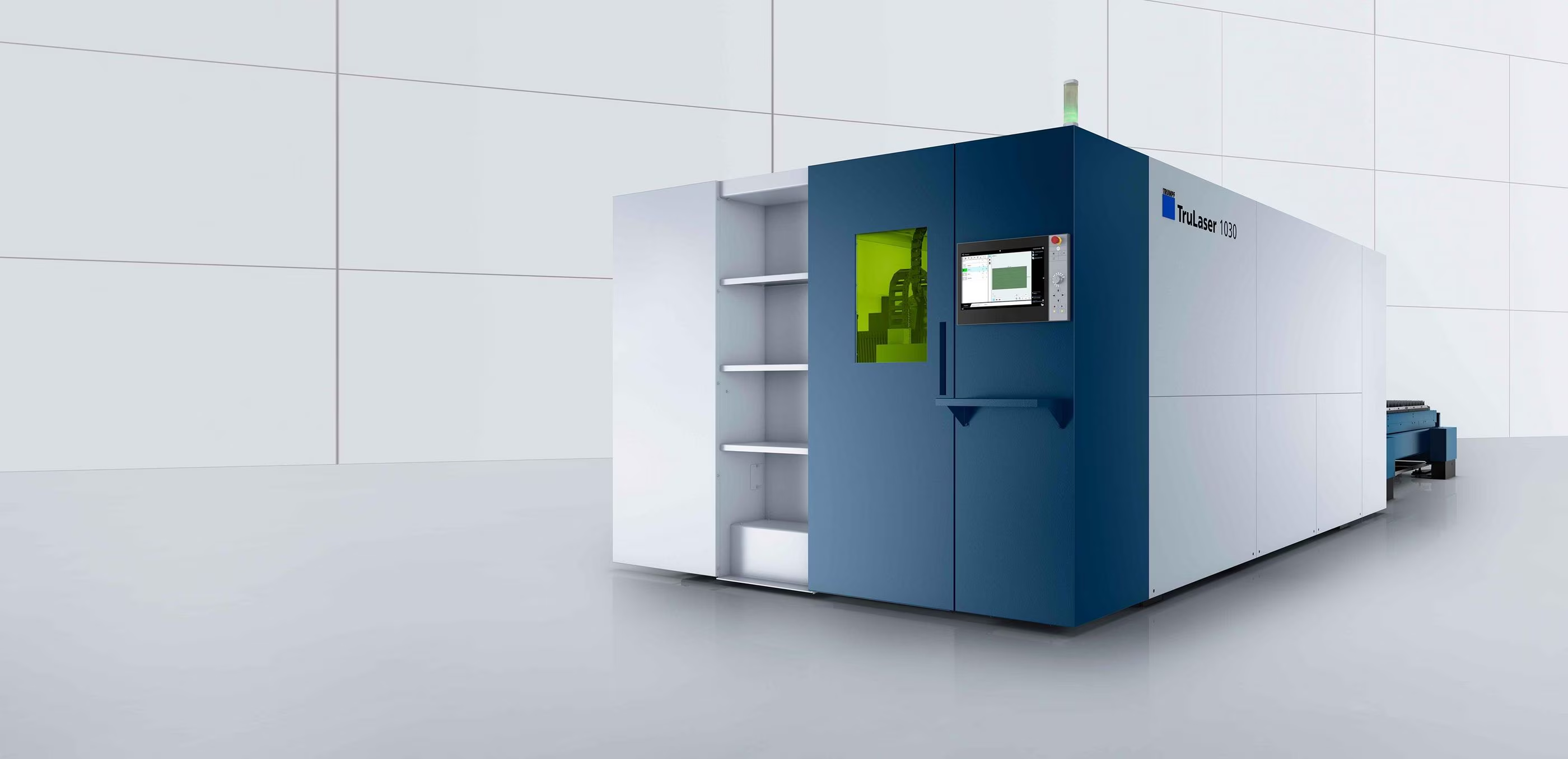
    High-speed precision cutting on our TRUMPF fiber laser with oxygen or nitrogen assist options.
    CNC Bending
    Precision press brake forming up to 1/4″ steel. Extremely consistent springback on cold-rolled steel.
    Countersinking
    82° and 90° countersinks for flush-mount fastener hardware.
    Tapping
    Thread holes directly into the sheet for blind or through-hole hardware attachment. Excellent cleanly tapped threads in A1018.
    Hardware Insertion
    PEM press-fit nuts, studs, and standoffs pressed into the sheet during fabrication.
    Deburring
    Edge smoothing to remove sharp burrs left from the laser cutting process.
    🎨
    Powder Coating
    Electrostatically applied powder coat in 10+ colors. Required for most steel applications to prevent oxidation.
    Welding
    MIG and TIG welding available for A1008, A36, and A1018 structural assemblies. Highly weldable materials.
    // Metallurgy
    Chemical Composition
    Carbon steel is primarily iron — but the small percentages of Carbon, Manganese, and trace elements tell the whole story. Carbon is the master variable: raise it and you gain strength and hardness; lower it and you gain ductility, formability, and weldability.
    Elemental Breakdown by Grade (% Weight, nominal)
    Iron (Fe) Base
    Carbon (C)
    Manganese (Mn)
    Silicon (Si)
    P + S (Trace)
    Iron is 98–99% of every carbon steel grade. What separates A1008, A36, and A1018 is governed entirely by 1–2% of alloying elements — chiefly carbon and manganese.
    Carbon is the primary strength lever. A1008 is ultra-low carbon (≤ 0.10%) for maximum formability. A1018 raises it to 0.15–0.20% for better machinability and thread-holding strength. A36 is structural — chemistry is secondary to its 36 ksi minimum yield requirement.
    Manganese amplifies carbon's effects. All three grades contain 0.30–0.90% Mn. It deoxidizes the melt, refines grain structure, and improves strength without the brittleness of raw carbon increases.
    Element A1008 CRS A36 HRS A1018 CRS Role
    Iron
    Fe — Base
    Bal.Bal.Bal. Matrix & structural base (~98–99%)
    Carbon
    C — Master Variable
    ≤ 0.10% ≤ 0.26% 0.15–0.20% Primary hardness & strength driver — more C = harder, less formable
    Manganese
    Mn — Strengthener
    0.30–0.60% 0.80–0.90% 0.60–0.90% Deoxidizer, grain refiner, tensile booster
    Silicon
    Si — Deoxidizer
    ≤ 0.035%* ≤ 0.40% ≤ 0.035%* Deoxidizer, improves melt quality & surface
    Phosphorus
    P — Controlled
    ≤ 0.030% ≤ 0.040% ≤ 0.040% Impurity — excess causes cold-shortness & brittleness
    Sulfur
    S — Controlled
    ≤ 0.035% ≤ 0.050% ≤ 0.050% Impurity — improves machinability at controlled levels; excess causes hot-shortness
    Copper
    Cu — Optional
    Optional ≥ 0.20% (when spec'd) Trace A36 may include Cu for mild atmospheric corrosion resistance

    * A1008 Si not specified in ASTM A1008 — effectively residual only. A36 per ASTM A36/A36M. A1018 per ASTM A108.

    A1008 · COLD-ROLLED
    Ultra-Low Carbon
    ≤ 0.10% C
    Best formability & surface finish
    A36 · HOT-ROLLED
    Structural Grade
    ≤ 0.26% C
    Yield-defined, not composition-defined
    A1018 · COLD-ROLLED
    Medium Carbon
    0.15–0.20% C
    Best machinability & thread strength
    // Common Questions
    Carbon Steel FAQ
    Frequently asked questions about our carbon steel fabrication capabilities.
    What is the difference between Hot-Rolled and Cold-Rolled steel?+
    Hot-Rolled Steel (A36) is formed at high temperatures, leaving a rougher surface covered with a tough, blue-grey iron oxide layer called "mill scale." Cold-Rolled Steel (A1008/A1018) is further processed at room temperature, which removes the scale and yields a smooth, clean surface, tighter tolerances, and improved strength. CRS is best for cosmetic parts and powder coating, while HRS is best for heavy, hidden structural components.
    Does carbon steel require a protective finish?+
    Yes. Unlike stainless steel or aluminum, raw carbon steel will rust naturally and quickly when exposed to moisture and air. If you are not welding or finishing the parts yourself, we highly recommend selecting Powder Coating as a secondary service to provide a durable, rust-proof finish.
    Do you use Oxygen or Nitrogen for laser cutting steel?+
    We standardly use Nitrogen assist gas for laser cutting thin-gauge steel (up to 12 gauge) to provide clean, oxide-free edges that are ready for immediate powder coating. For thicker plate (1/8″ and 1/4″ A36 or A1018), we often use Oxygen to increase cutting speed and edge quality. If your parts require oxygen cutting but will be powder coated, the cut edges may require mechanical abrasion to ensure proper paint adhesion.
    Is steel easy to bend and form?+
    Yes! A1008 Cold-Rolled Steel is one of the easiest and most consistent materials to form on a CNC press brake. It exhibits minimal springback compared to stainless steel or aluminum, resulting in highly precise angle tolerances.
    Start your stainless steel project today.
    Upload your DXF and receive an instant quote. Our engineers will verify material compatibility before production.
    Get an Instant Quote →
    EXPLANATION & DETAILS
    Information