01 / UPLOAD
Add your CAD
Start with a supported 2D or 3D file that represents the part you actually want made.
Both can make excellent parts. The difference is how easily your job moves from CAD to price to production. Xeon NC is built for instant access, no minimums, and a path that works from one garage-built prototype to an enterprise production program.
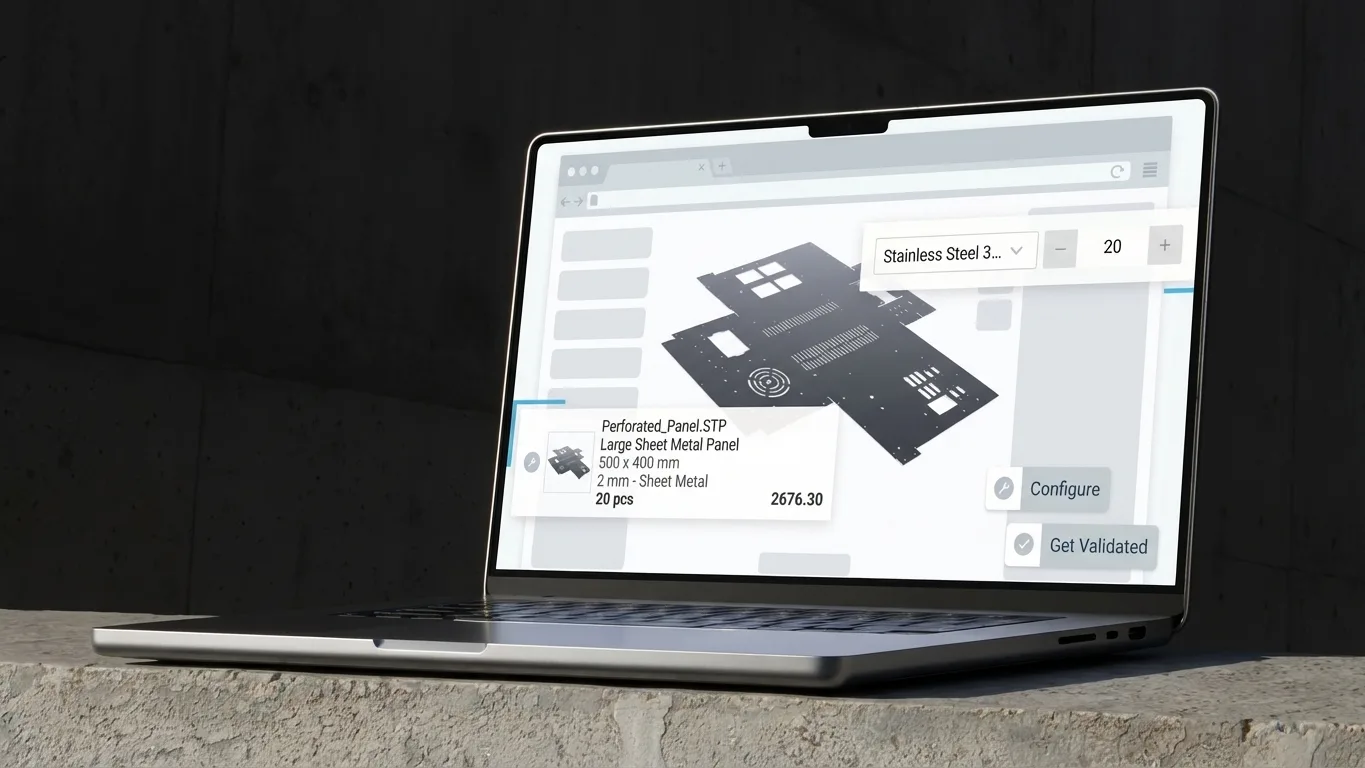
A capable local shop and Xeon NC may use equally serious equipment. What changes is the path your job takes before a machine ever starts.
The traditional shop workflow is usually relationship-driven. You send an email, call an estimator, explain the job, wait for questions, and receive a quote when the shop has time to build one. That human flexibility can be valuable, especially when the problem is still loosely defined.
Xeon NC begins with the digital definition of the part. Upload supported CAD, select the available material and process options, review pricing, and move forward without waiting for a salesperson to translate a production-ready design into an RFQ.
This does not remove people from manufacturing. It removes avoidable delay from the parts of the job software can handle well, so manufacturing and engineering attention can stay focused on manufacturability, quality, and special requirements.
The right choice depends on how complete the design is, how quickly you need pricing, and how much of the job fits a repeatable production process.
If the part already exists as production-ready CAD, getting a price should not require a chain of emails and callbacks.
Start with a supported 2D or 3D file that represents the part you actually want made.
Select available material, thickness, quantity, operations, finish, and other job options.
Review pricing and the manufacturing setup while the design and buying decision are still in front of you.
Place the order online. Suitable work continues through manufacturing and engineering review before production.
The benefit is more than speed. Instant feedback lets a designer compare quantities, materials, finishes, and design revisions while those choices are still easy to change. Quoting becomes part of engineering instead of a separate administrative event.
A first prototype should not be forced into a production quantity just to get through the door.
Test the fit, learn from the hardware, revise the design, and order again. When demand grows, move into larger quantities without rebuilding the entire sourcing path.
No minimums matter to more than hobbyists. An enterprise engineer may need one test fixture, one replacement panel, or one first article before releasing a program. A startup may need five parts for a pilot build. A fabricator may need a single difficult blank that saves hours of manual work. The correct quantity is a technical and business decision—not a gatekeeping tool.
Customer size changes the context of a job. It should not determine whether the customer can access production-grade manufacturing.
Upload the plate, bracket, panel, or blank that is inefficient to cut by hand, then finish the build in your own shop.
Build one, revise quickly, and preserve cash until the product has earned a larger run.
Give designers a fast path to fixtures, enclosures, brackets, test hardware, and pilot production.
Support prototypes, first articles, documented repeat work, overflow capacity, and programs that need a scalable digital thread.
Xeon NC is built to serve this entire range. The garage builder and the enterprise engineer may order different quantities and require different documentation, but both deserve a clear price, capable equipment, responsible review, and parts made to the defined requirements.
A fair comparison should say where proximity, improvisation, and a hands-on relationship create real value.
The two models can also work together. Local fabricators use Xeon NC for precise blanks and formed components, then weld, assemble, install, or service the final system close to the customer. A digital factory can strengthen a local shop by giving it fast access to processes or capacity it does not keep in-house.
No. Single-piece orders are welcome, and the same workflow can support larger quantities when the design is ready to scale.
Upload supported CAD, choose the available material and manufacturing options, review pricing and manufacturability information, and place the order online.
Yes. Xeon NC is designed to support work from one prototype through repeat orders and production programs without requiring the customer to start over with a new sourcing process.
No. Software makes common configuration and pricing easier. Manufacturing and engineering review still matter before suitable work reaches production, especially when drawings, certifications, tolerances, or special requirements are involved.
Yes. Upload your supported CAD file and request a review. Xeon NC can look at manufacturability, material and process selection, and important production requirements before the job moves forward.
Yes. You can request to speak with a Xeon NC applications engineer about your part geometry, materials, manufacturing process, quantities, tolerances, finishes, certifications, and other special requirements.
Yes. A local fabricator can outsource precise blanks, formed components, machined parts, or overflow work to Xeon, then complete welding, assembly, installation, and service locally.
Start local when you need a walk-in repair, field measurement, physical sample matching, emergency modification, customer-supplied odd stock, or work that cannot yet be expressed as production-ready CAD.
Upload your CAD, configure the job, and get an instant quote. Start with one part or build the production order your program needs.
Upload Parts & Get a Quote