
ASTM A1008 / Cold rolled
Smooth, matte, usually oiled
Strong choice for thin-gauge laser cutting, bending, visible panels, enclosures, and coating systems that benefit from a clean, uniform substrate.
Why mild steel is such a strong value for laser-cut parts—and how to choose the actual sheet or plate specification, cut edge, fabrication route, finish, and certification your job needs.
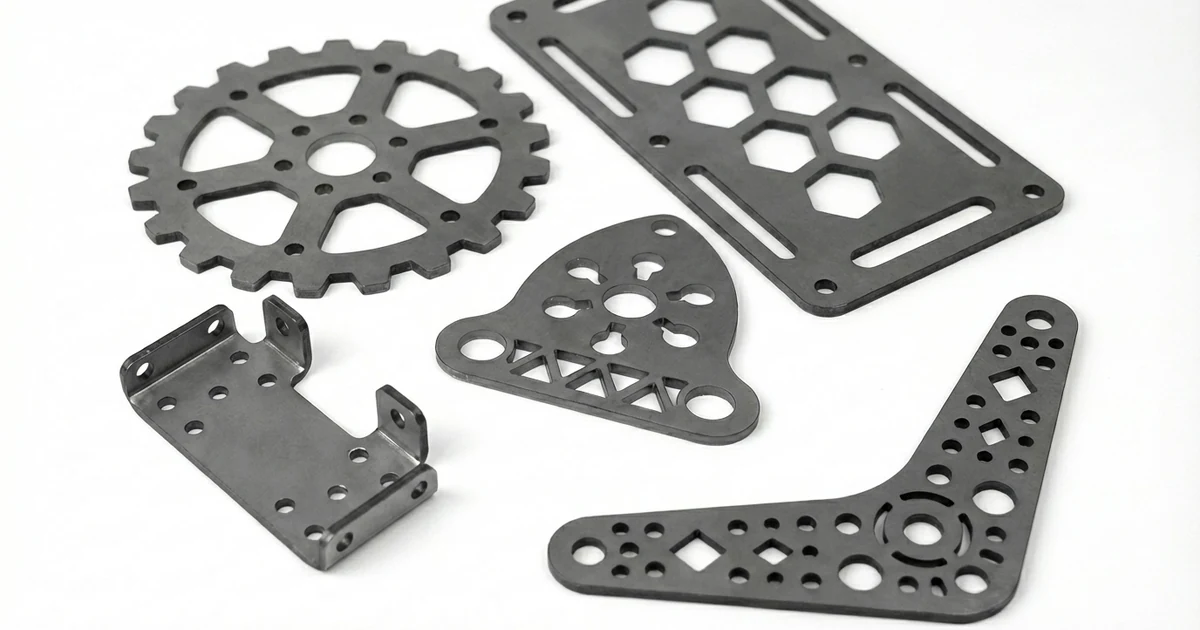
The term usually points to readily fabricated low-carbon steel. It does not guarantee one chemistry, strength, surface, tolerance, thickness, product form, or certification.
For concept work, “mild steel” may be enough to begin a quote. For production, purchasing and engineering need a complete material identity. ASTM A1008 covers several cold-rolled sheet designations; ASTM A1011 covers several hot-rolled sheet and strip designations; ASTM A36 covers structural-quality shapes, plates, and bars. Those standards overlap in everyday shop language but are not interchangeable.
Pick the priority that most strongly drives your job. The result is a starting point for quoting—not permission to replace the grade on an engineered drawing.
A common starting point for brackets, covers, panels, enclosures, and formed sheet where a smooth matte surface and controlled thin-gauge dimensions matter.
The cheapest raw sheet is not always the lowest-cost finished part. Surface preparation, cut-edge cleanup, forming, welding, coating, and appearance all affect the result.
Strong choice for thin-gauge laser cutting, bending, visible panels, enclosures, and coating systems that benefit from a clean, uniform substrate.

Pickling removes hot-roll scale; oil adds temporary storage protection. Useful for fabricated parts needing a cleaner surface without moving to cold-rolled sheet.

A36 is specified by structural product and mechanical requirements, not as a universal synonym for hot-rolled sheet. Mill-scale surfaces often need more downstream preparation.
Galvanized sheet adds a zinc coating designation such as G90. Cutting, welding, edge protection, fume controls, cosmetic expectations, and coating repair need specific planning.
| Attribute | A1008 cold rolled | A1011 hot rolled / HRPO | A36 plate | A653 galvanized |
|---|---|---|---|---|
| Best starting point | Thin sheet, smooth surface, formed parts | General hot-rolled fabrication and heavier sheet | Structural plate, shapes, and bars | Sheet needing zinc corrosion protection |
| Surface | Matte, smooth, usually oiled | Scale as rolled; scale-free when pickled/oiled | Often mill scale unless prepared | Zinc or zinc-iron coating system |
| Strength logic | Depends on CS/DS/SS/HSLAS designation | Depends on designation and grade | Structural mechanical requirements | Base-steel designation plus coating designation |
| Primary caution | Rust and oil removal | Surface variation and scale/prep | Product form and certification must match | Coating damage, fumes, weld/finish plan |
For the full standards map, designation families, gauge data, and drawing examples, use Xeon’s deep cold-rolled steel guide.
Fiber lasers can process intricate contours with compensated toolpaths and repeatable geometry. Assist gas removes molten metal and changes oxidation, burr, color, speed, and downstream preparation.
Oxygen reacts with the steel and adds process energy. It is productive on mild steel, especially as thickness increases, but it leaves an oxide-bearing edge.
High-pressure inert gas expels the melt and shields the kerf, producing an oxide-free edge when the process is in control.
Modern mixed-gas processes can reduce burr and balance part quality for selected mild-steel thicknesses, alloys, and machine parameters.
Gauge is a lookup label, not a universal dimension. Put the nominal decimal thickness in the CAD and drawing, and identify the material family it belongs to.
Minimum reliable feature size changes with thickness, contour, cut gas, heat, and required edge. Use Xeon’s per-material DFM data instead of one universal rule.
A1008 CS Type B, A1011 SS Grade 50, full-hard sheet, and A36 plate do not share one radius, tonnage, springback, or cracking assumption.
Closely spaced holes, thin webs, and long cuts can concentrate heat and release residual stress. Use generous webs and a layout that supports flatness.
Tabs and slots can locate an assembly, but an interference fit can hold joints open or create restraint. Add intentional assembly clearance and welding access.
Identify powder-free threads, grounding points, weld zones, hardware, cosmetic faces, and critical datums before the finish route is selected.
Commercial and drawing-quality sheet can form well. Strength designation, grain direction, thickness, die opening, inside radius, and springback still control success.
Low-carbon steels are commonly welded, but the exact grade, joint, coating, filler, WPS, distortion plan, and inspection requirements matter. See the welding-defects guide.
Cleaning and pretreatment drive adhesion and corrosion performance. Oxygen-cut oxide and mill scale may require removal before coating. See the powder-coating guide.
Bare carbon steel and exposed cut edges can rust. Mill oil protects during handling and storage only; it is not a service-life coating.
Compare complete routes, not sheet price alone. The best-value steel is the one that meets service and documentation requirements with the least total processing risk.
General equipment, sensors, actuators, motors, controls, and industrial supports.
Powder-coated cabinets, covers, trays, doors, guards, and electrical or mechanical panels.
Machine bases, carts, fixtures, tables, furniture, and fabricated assemblies designed to an appropriate structural basis.
Weld fixtures, drill templates, assembly aids, gauges, sacrificial tooling, and shop organization.
Mounting plates, guards, brackets, tabs, frames, test hardware, and prototype systems with engineering review.
Decorative panels, letters, displays, furniture, and exterior elements with a suitable corrosion and finish system.
No. It is an informal family name. A production order should identify the product specification, designation or grade, thickness, surface, finish, and certification requirements.
ASTM A1008 cold-rolled commercial steel is a common starting point when a smooth surface and good formability matter. HRPO can fit heavier general fabrication. Engineered strength, fatigue, impact, code, or certification requirements may move the job to a different designation or grade.
Hot-rolled mill-finish steel retains an oxide scale. Pickling removes the scale, and oil is applied for temporary protection, producing hot-rolled pickled-and-oiled steel with a cleaner fabrication surface.
No. ASTM A36 is a structural carbon-steel specification covering shapes, plates, and bars. Hot-rolled sheet and strip are commonly ordered under ASTM A1011. Material may be dual-certified in some supply situations, but the documentation must support the ordered requirement.
Use oxygen when its productivity and economics fit the job and an oxidized edge is acceptable or will be prepared. Use nitrogen when an oxide-free edge creates enough downstream value to justify the gas and capacity tradeoff. Mixed-gas processes may provide another route for selected thicknesses.
Bare carbon steel can rust. Mill oil is temporary protection only. Choose powder coat, paint, plating, galvanizing, or another engineered corrosion system for the actual environment.
Upload your flat or formed CAD files for instant pricing. Include the exact material callout, thickness, finish, certifications, USA-source requirements, and any cut-edge or weld-preparation notes.