Now powder coating in-house — Get your instant quote →
Overview
How It Works
Colors
Materials
Specs
Design Tips
Electrostatic · Oven-Cured

POWDER

COATING.

Durable, electrostatically applied dry powder finish — charged and oven-cured into a uniform, tough shell that's harder than liquid paint and available in any RAL color.

2–4
Mil thickness
RAL+
Any color, any sheen
Tougher than paint
Powder coating at Xeon NC
01 — How It Works

SPRAYED ON.

BAKED IN.

Powder coating is a dry-film finish — no solvents, no drips, no paint mist. Charged powder particles cling to a grounded part, then cure in an oven into a continuous polymer film that's mechanically and chemically bonded to the surface.

01
Clean & Degrease
Parts run through an alkaline wash that removes oils, fingerprints, laser slag, and shop debris. Any contamination here causes fish-eyes and adhesion failure later.
02
Pre-Treat
Steel parts are zinc-phosphated; aluminum parts get a chromate-free conversion coat. The pre-treatment etches the surface for adhesion and adds a layer of corrosion protection underneath the powder.
03
Apply Powder
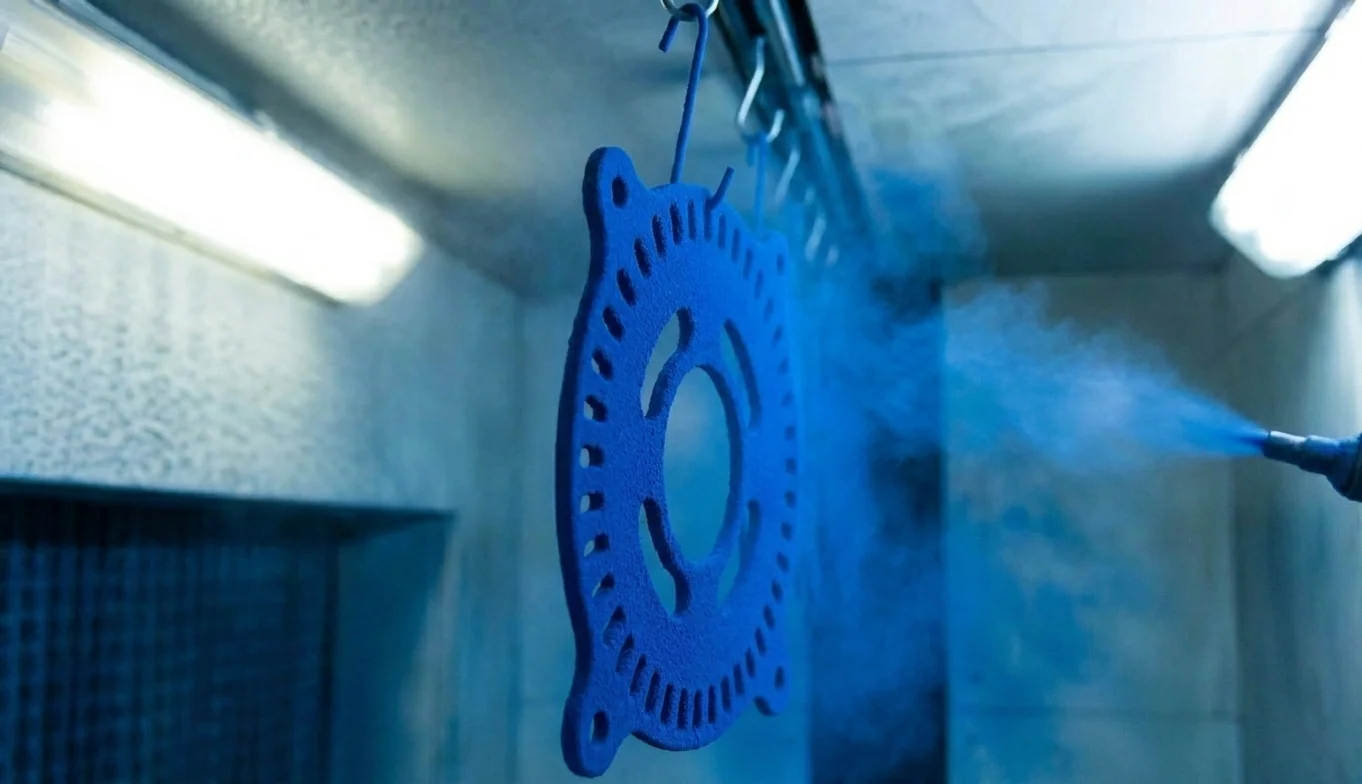
Parts hang on a grounded conveyor and get sprayed with electrostatically charged powder. Charged particles wrap around to cover even tight inside corners and recessed features.
04
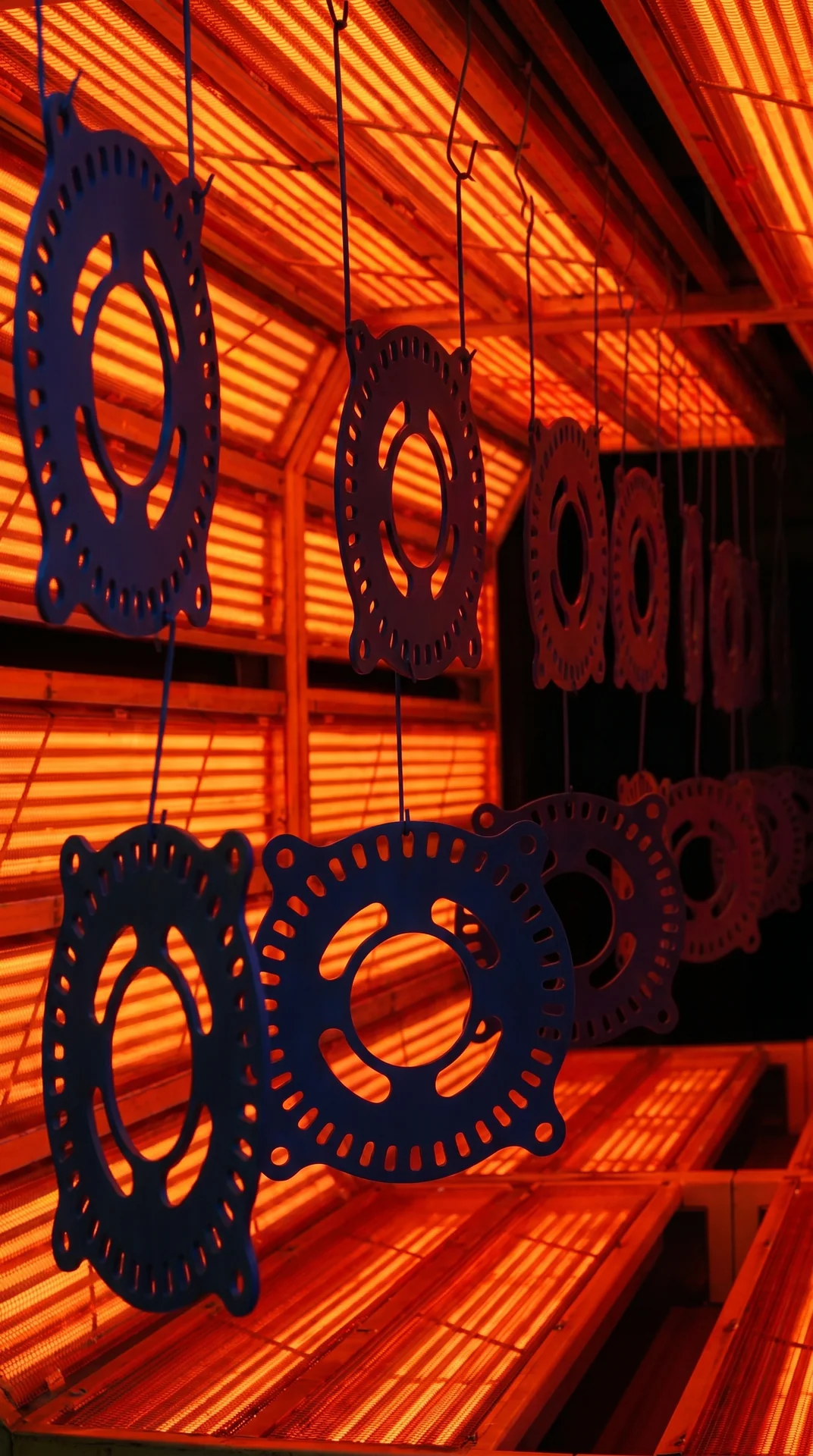
Cure
The part rolls into a 375–400°F oven for 15–20 minutes. Powder melts, flows together, and chemically cross-links into a continuous polymer film that's bonded to the substrate.
05
Inspect & Pack
Each part is checked for coverage, color match, and finish defects. Pass inspection and the part ships ready to install — no drying time, no off-gassing, no recoats.
02 — RAL Color Comparator

PICK A RAL.

SEE THE FINISH.

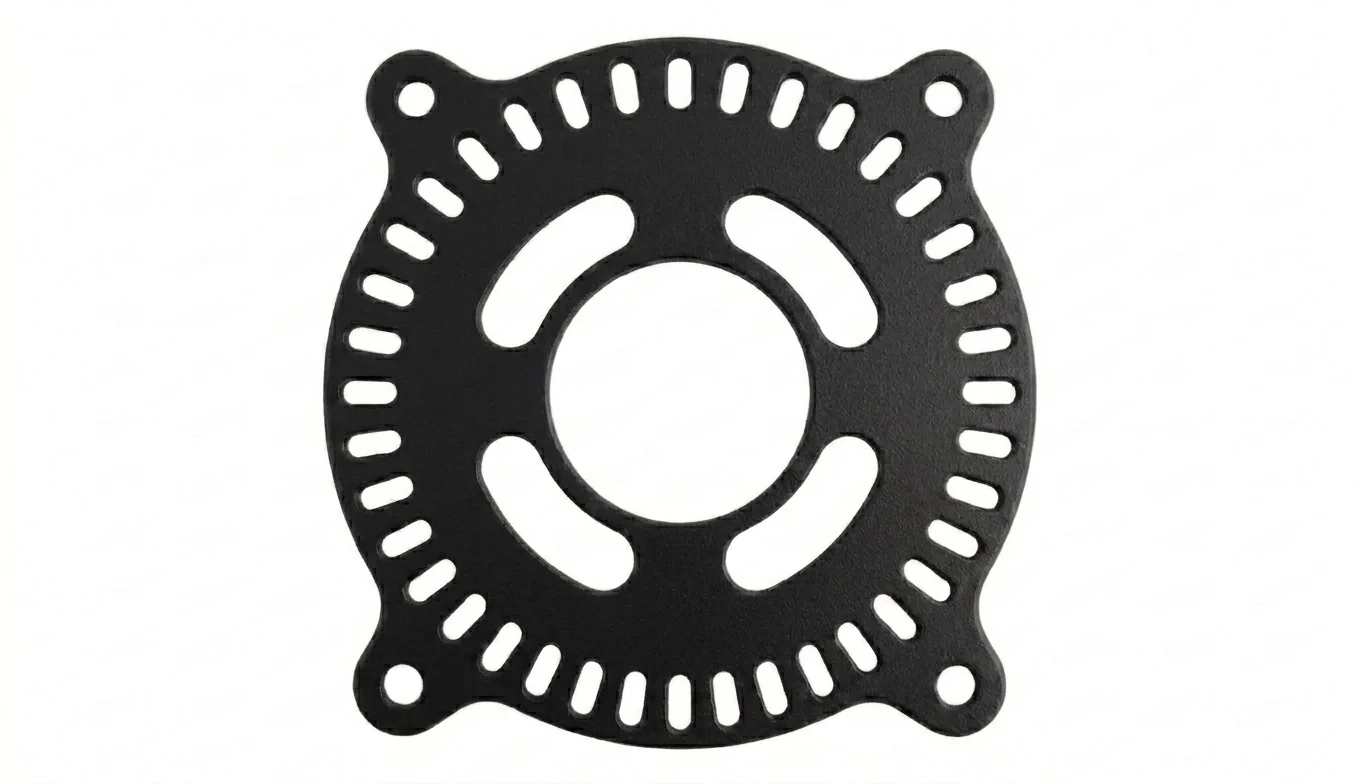
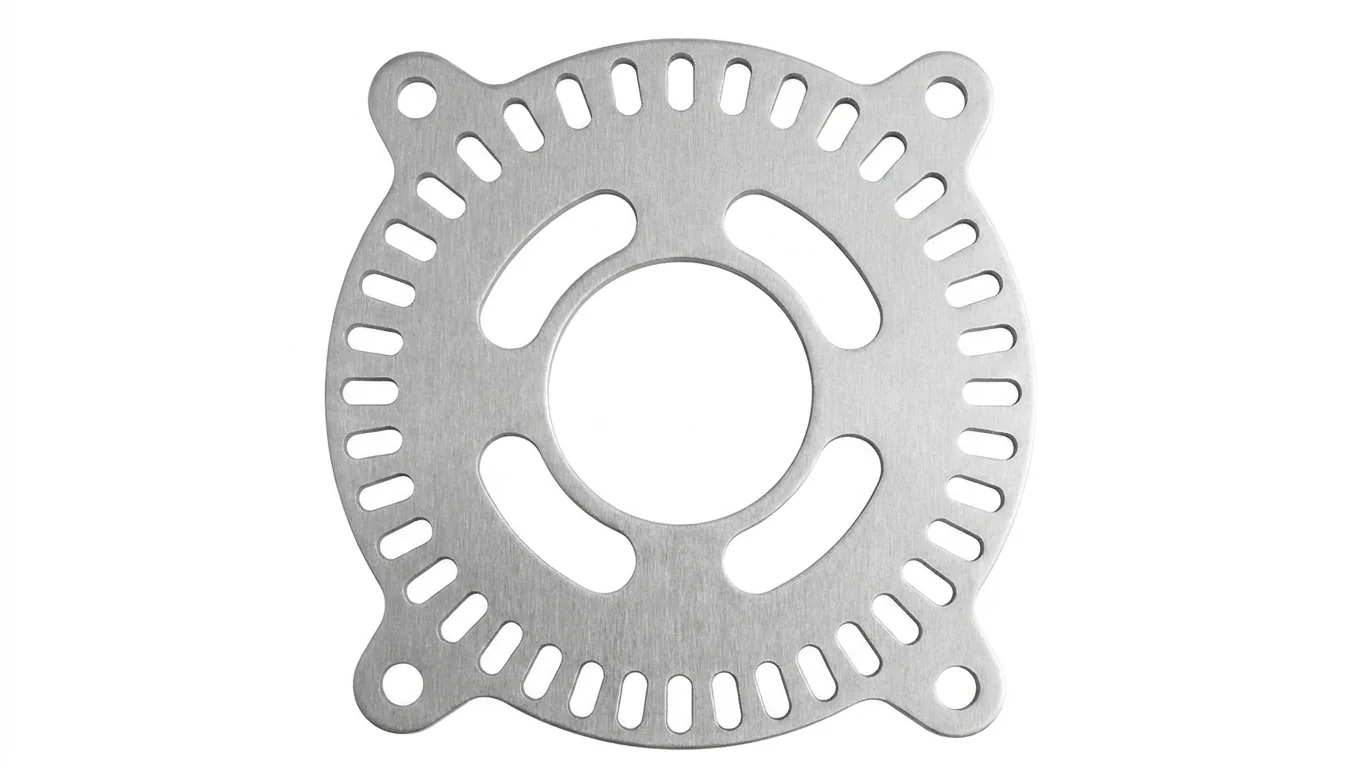
Pick a swatch to load that RAL color into the right side of the slider. Drag left or right to compare the finished part against the same part before powder coating — clean, raw sheet metal exactly as it leaves our laser.

Powder coated RAL color sample
Raw sheet metal before powder coating
Raw Sheet RAL 9017 Traffic Black

← Drag slider left & right to compare  →

// BEFORE · Raw Mill
Uncoated Sheet Metal

Bare cold-rolled mill finish — just laser-cut and deburred. No protection from corrosion, fingerprints, or scuffing — functional but not finished.

// RAL 9017 · Most Popular
Traffic Black

Deep matte/satin black — the workhorse color for AV racks, broadcast cabinets, and any product where neutral, low-glare surfaces are required.

Don’t see your RAL? We can match any code →
03 — Materials

COATS

EVERYTHING.

Powder coating works on any conductive substrate that can survive the cure oven. The pre-treatment chemistry changes per material to ensure adhesion and corrosion resistance — specify the substrate clearly in your file.

  • Carbon Steel (A1008, A36, A1018) — the most common substrate. Zinc-phosphate pre-treatment provides excellent adhesion and undercoat corrosion protection.
  • Stainless Steel 304 / 316 — coats successfully, but consider mill or brushed finish first if a clean stainless look is acceptable.
  • Aluminum 5052 / 6061 / 3003 — chromate-free conversion coat is used for adhesion. Aluminum parts cure cleanly and hold color exceptionally well.
  • Galvanized & Galvanneal — great for outdoor service. Pre-treatment must remove the white-rust haze; specify on your drawing.
  • Cast Aluminum & Pre-Welded Assemblies — supported. Be aware that out-gassing during cure can cause pinholes — we run an extra pre-bake on castings.
  • Avoid: any part that can’t survive 400°F (plastics, soft solder, rubber inserts, lithium batteries). If your assembly has heat-sensitive elements, install them after powder coating.
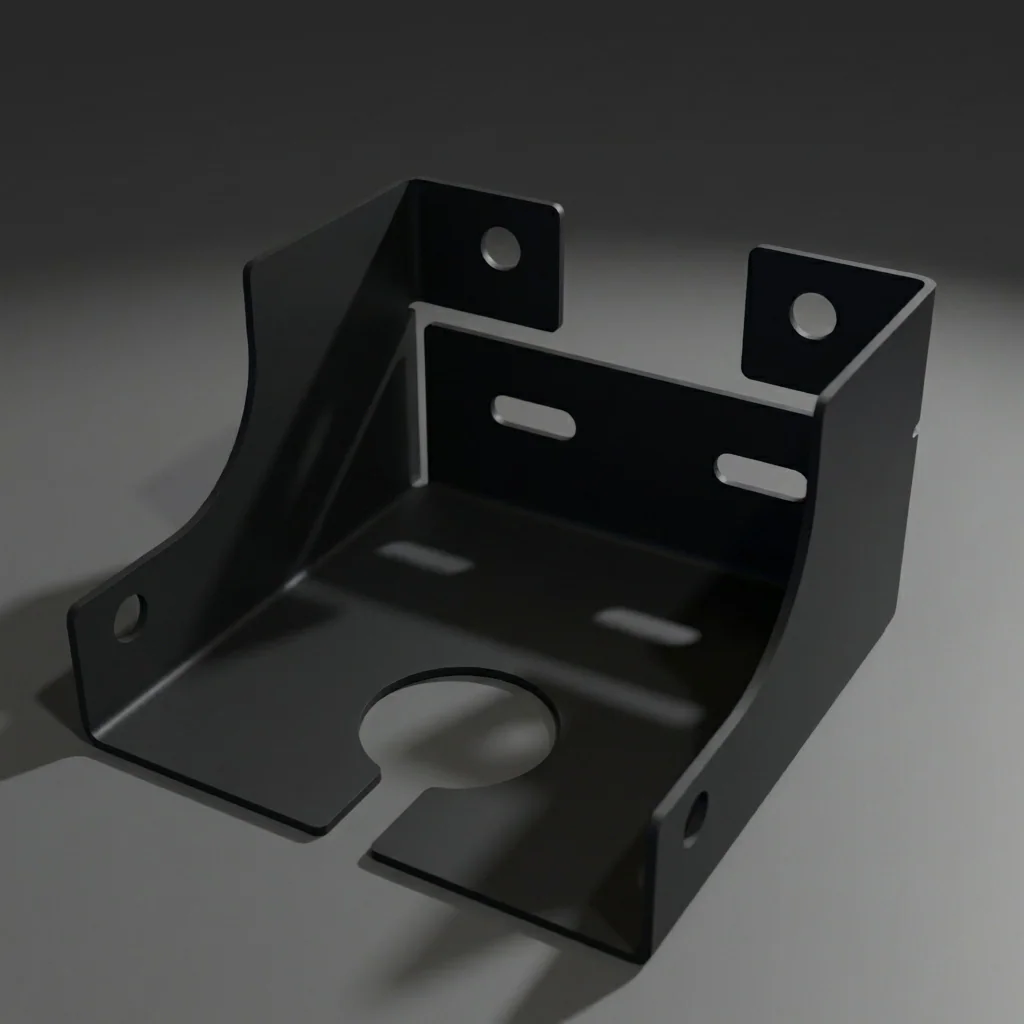
Powder coated sheet metal parts at Xeon NC
STEEL - STANDARD
ALUMINUM - ANY COLOR
04 — Specifications

TECHNICAL DATA

Specification
AAMA 2604 (architectural) · AAMA 2605 (super-durable) · PCI 4000 process
Coating Thickness
2 – 4 mils standard (50 – 100 µm) · up to 6 mils on textured / wrinkle finishes
Cure Schedule
375 – 400°F (190 – 205°C) for 15 – 20 minutes part-metal-temperature
Powder Chemistry
Polyester TGIC (outdoor) · Epoxy-polyester hybrid (indoor) · Super-durable polyester (architectural)
Sheen Options
Flat · Matte · Satin · Semi-Gloss · Gloss · Wrinkle · Textured · Hammertone
Color System
Full RAL Classic palette · RAL Design · Federal Standard 595 · custom Pantone match
Adhesion (ASTM D3359)
5B (no flaking on cross-cut tape test) · standard production target
Salt Spray (ASTM B117)
1000+ hours on zinc-phosphated steel · 500+ hours on aluminum without conversion coat
Process Sequence
Hardware insertion → bending → weld & finish → powder coating. Threaded holes are masked or chased after.
Lead Time
Adds 2 – 3 business days to standard production
File Requirements
Specify finish callout on drawing — e.g., “POWDER COAT, RAL 9017 SATIN, INSIDE & OUT.” Identify any masked features and electrical contact (rack) points.
05 — Design Tips

DESIGN IT

RIGHT.

A few callouts on your drawing prevent the most common powder-coat problems — and protect critical features from the bath, the spray, and the cure oven.

  • Call out the RAL and sheen: e.g., “POWDER COAT, RAL 9017, SATIN, INSIDE & OUT.” Always include the sheen — the same RAL in matte and gloss reads completely differently.
  • Hang point / rack mark: every part needs at least one electrical contact during powder spray. The rack mark is a small uncoated spot — identify a hidden location for it.
  • Drainage holes: blind pockets fill with rinse water during pre-treat. Add a 1/8″ weep hole at the low point of any captive cavity, or specify orientation during cure.
  • Threaded holes: mask or chase after coating. Powder builds up in threads and ruins the fit — specify masking on every PEM nut, tapped hole, and stud.
  • Hardware before powder: install all PEM nuts, studs, and standoffs before coating. The hardware then gets coated with the part and looks integrated — not an afterthought.
  • Edges and corners: sharp edges thin the coating (Faraday cage effect). Break sharp corners with a small radius (R 0.030″ minimum) for uniform coverage. Recommended edge-break class and outline radius by gauge are in the sharp-corner / edge-break guide.
  • Welded assemblies: grind and blend welds before coating. Powder hides porosity but accentuates ridges, splatter, and undercut.
  • Heat-sensitive components: install rubber gaskets, foam pads, plastic windows, and electrolytic capacitors after powder coating — never before the 400°F oven.
Powder coating spray gun process
ELECTROSTATIC SPRAY
GROUNDED PART
Ready for Production

QUOTE YOUR PARTS

Upload your DXF or STEP file and select powder coat during quoting. Choose your RAL, sheen, and we handle every step in-house before shipping.

Get a Quote All Finishes →